Manufacturing Characteristics of Wood Veneer
Manufacturing Characteristics
Explore how WDMA defines allowable manufacturing marks and cut-specific grain traits across grades. Use these visual criteria to write precise specifications and review submittals with confidence.
- Sweep
- Slope
- Barber Pole
- Repairs
- Splits

Overview
A veneer’s appearance reflects both the wood’s natural growth and the processes used to prepare its surface. The WDMA face-grade table addresses manufacturing characteristics—such as ruptured grain, blended hairline splits, and repairs—separately from special characteristics, including grain slope and sweep in quartered veneers.
Explore these characteristics to understand how they may appear on a door face, how WDMA addresses their acceptability, and what to consider when specifying and reviewing veneer.
At-A-Glance
What Face Grade Controls | What Face Grade Does NOT Guarantee |
|---|---|
Whether manufacturing characteristics—such as rough cut or ruptured grain—are permitted | A completely flawless surface under every lighting condition |
The permitted size, number, and blending of repairs and repaired hairline splits | Invisible repairs or identical appearance across door faces |
Limits on grain slope and sweep in quartered veneers | Perfectly vertical grain or uniform grain alignment across adjacent doors |
"Face grade sets the limits for manufacturing and special characteristics— it does not guarantee an unmarked surface or perfectly straight grain."
Manufacturing Characteristics
Sweep/Slope
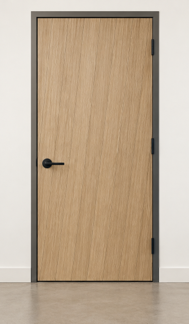
Sweep and slope describe variations in grain direction within a veneer face, particularly in quartered veneers where a straight-grain appearance is typically expected. Slope is the angle at which grain runs relative to the veneer’s long edge, while sweep is the gradual curve of the grain along its length. These features affect visual alignment rather than indicating surface damage or finishing defects. The WDMA face-grade table addresses both under special characteristics for quartered veneers.
TYPICAL APPEARANCE
Sweep and slope introduce directional variation into an otherwise straight-grain pattern. Grain lines may lean diagonally, curve gently, or combine both effects across the veneer face.
Grain slope: Relatively straight grain lines that run at an angle to the veneer’s long edge rather than parallel to it.
Grain sweep: Grain lines that gradually curve or bow along the veneer’s length, creating a gentle departure from a straight path.
Combined sweep and slope: Grain that both angles and curves, creating a more noticeable shift in direction across the face.
Sweep/Slope Specification Watch Outs:
01
Tall doors can amplify grain slope.
Angled grain—most common in quarter- and rift-cut veneers—can make a door appear out of square even when its dimensions are correct.
Recommended response
State any requirements tighter than WDMA allowances explicitly in the specifications and confirm the manufacturer can meet them. A higher face grade alone should not be treated as a guarantee of straight grain.
02
Grain sweep can create a wavy appearance.
A gradual curve in grain direction may visually distort the face without indicating that the door itself is warped.
Recommended response
Do not assume quarter- or rift-cut veneer will have perfectly vertical grain. If angled grain would compromise the design, discuss tighter slope limits with the manufacturer before specifying.
03
Permitted does not mean perfectly straight.
WDMA allows maximum grain slope of 1″ in 12″ and grain sweep of 2½″ in 12″ in rift- and quarter-cut veneers. Comb grain has a tighter maximum slope.
Recommended response
If the design requires straighter grain than standard allowances provide, discuss veneer selection and any tighter requirements with the manufacturer before specifying. Confirm availability and document agreed-upon criteria.
Manufacturing Characteristics
BarberPole
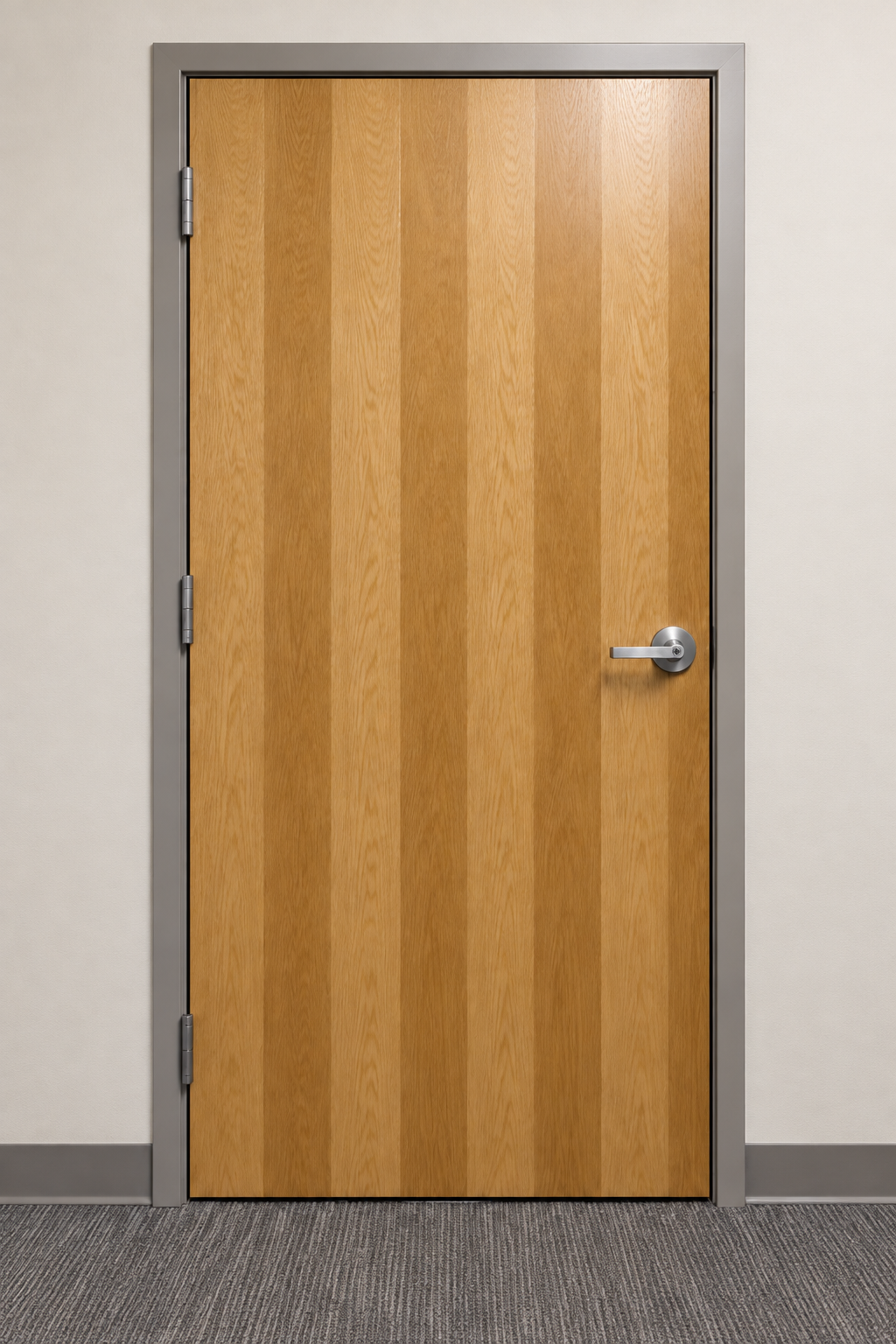
Barber pole is an alternating light-and-dark appearance that can occur in book-matched veneers. When adjacent veneer leaves are flipped to create a mirrored grain pattern, their exposed surfaces can reflect light differently. This contrast is an optical effect rather than necessarily a difference in wood color or stain application. Its visibility can change with lighting, finish, and viewing angle.
TYPICAL APPEARANCE
Barber pole creates a striped appearance across the door face, with adjacent veneer leaves appearing lighter or darker despite having similar underlying color.
Alternating bands: Adjacent leaves appear as light and dark vertical strips, often following the veneer leaf widths.
Shifting contrast: The intensity—and sometimes the apparent light-to-dark relationship—changes as the viewer moves or the lighting changes.
Mirrored grain with uneven sheen: The grain pattern appears symmetrical, but neighboring leaves reflect light differently.
Barber Pole Specification Watch Outs:
01
Book matching can produce visible striping.
A mirrored grain pattern does not guarantee a uniform light-and-dark appearance across the face.
Recommended response
Consider slip matching when uniformity is the priority. Keeping leaves oriented the same way can reduce barber pole, although it does not guarantee identical appearance across the face.
02
Lighting can amplify the effect.
Directional light and changing viewing angles may make barber pole more noticeable in the installed setting.
Recommended response
Do not rely on sample approval to prevent it. A small sample cannot establish how every leaf on a full door will reflect light. Discuss the matching method and appearance expectations with the manufacturer before specifying.
03
Staining is not a reliable correction.
Because the contrast comes from how the wood reflects light, color adjustments may not eliminate it.
Recommended response
Address the effect before fabrication. If alternating light-and-dark bands would be unacceptable, discuss alternative veneer matching options or face materials rather than relying on finishing to conceal them.
Manufacturing Characteristics
Repairs
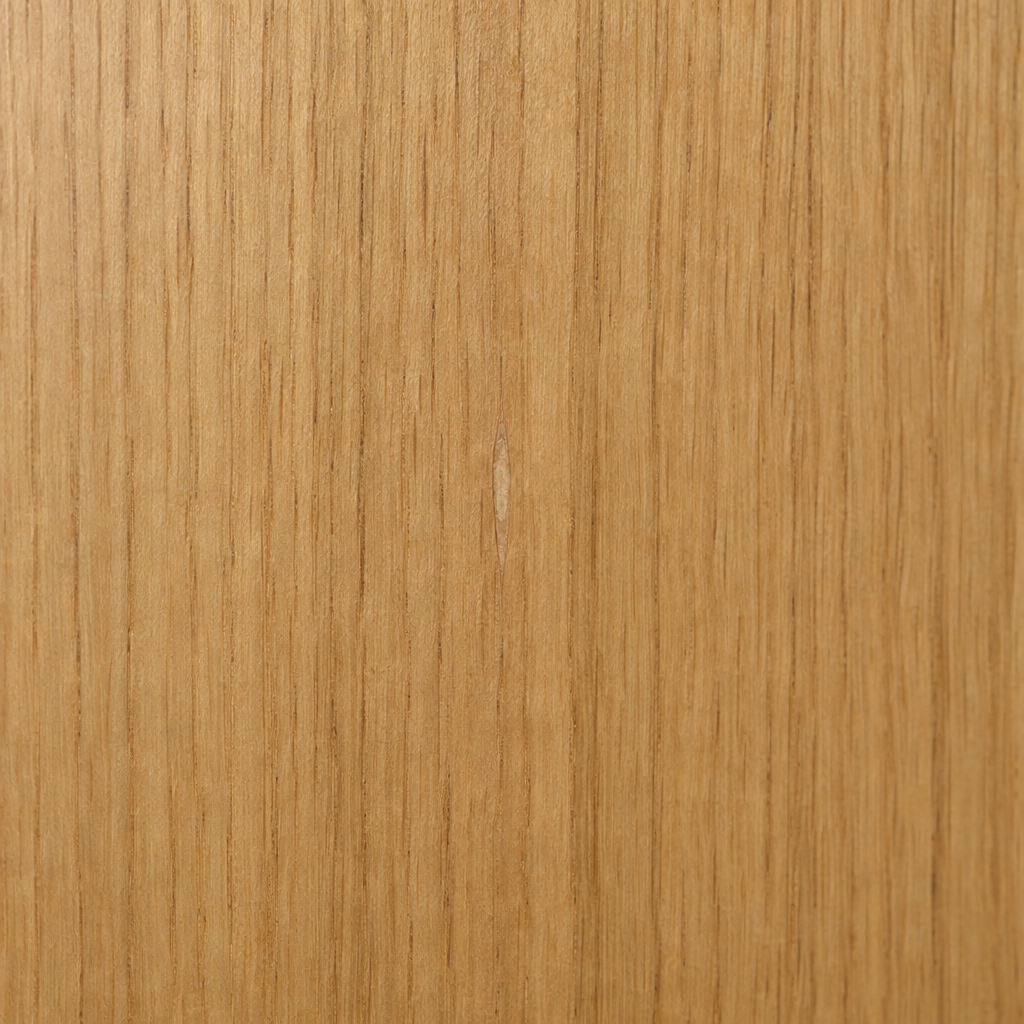
Repairs are localized wood patches, shims, or filler materials inserted or glued into a veneer face to achieve a sound, smooth surface. WDMA permits repairs in both Grade AA and Grade A faces, provided they meet defined size limits and blend with the surrounding wood color. While these repairs restore surface integrity, blending does not mean they will be completely invisible.
TYPICAL APPEARANCE
Repairs appear as small, isolated areas where natural voids or surface irregularities have been stabilized and filled prior to finishing.
Color-matched filler: Small filled spots that match the adjacent wood tone but lack natural grain lines.
Wood patches and shims: Carefully cut veneer inserts that match the surrounding color but may show a faint outline along their perimeter.
Size difference by grade: Grade AA restricts repairs to "Very Small Blending," while Grade A permits "Small Blending."
Repairs Specification Watch Outs:
01
Blending is not invisible.
A repair matches color tone, but differences in grain direction, texture, and stain absorption often keep it detectable upon close inspection.
Recommended response
Confirm grade allowances. Grade AA allows only very small blending repairs, while Grade A allows slightly larger small blending repairs.
02
Clear and natural finishes highlight repairs.
Light or clear topcoats show filler outlines and sheen differences more readily than darker, pigmented stains.
Recommended response
Specify restrictions early. If the design intent requires faces with no synthetic fillers or visible patches, specify this explicitly with the door manufacturer prior to bidding and ordering.
Manufacturing Characteristics
HairlineSplits
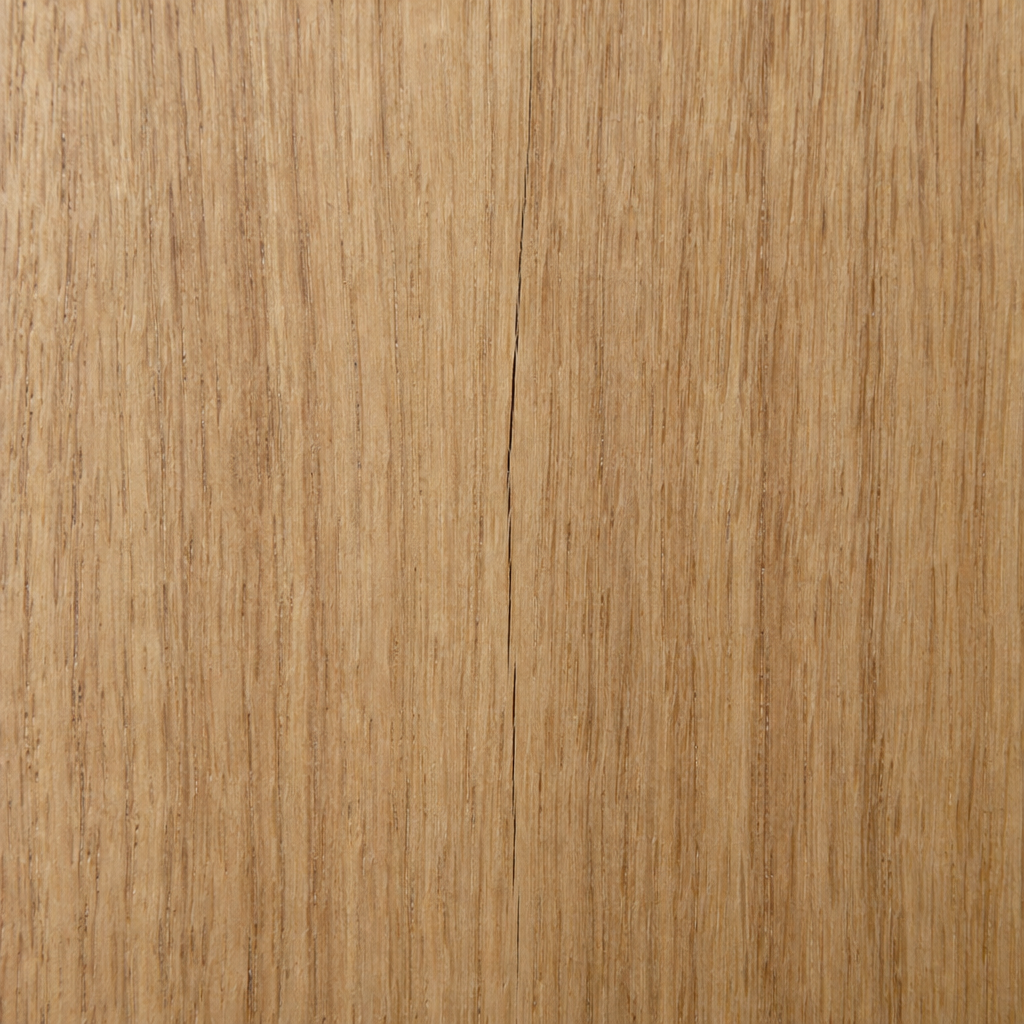
Hairline splits are narrow separations that run along the natural grain, typically caused by drying stresses at the ends of veneer components. WDMA does not allow open splits of any kind on finished doors; it only permits splits that have been properly closed and repaired with color-matched wood or filler to ensure a sound face.
TYPICAL APPEARANCE
Repaired splits appear as very fine, tight lines following the grain that have been bonded and filled flush with the surface.
Fine grain-line fills: Slender, tapered lines running parallel to the wood fibers that blend with surrounding color.
Panel-end locations (Grade AA): In Grade AA, these repairs are strictly confined to the top or bottom ends of the panel.
Tight width: Repaired splits are hairline in width and do not present an open gap or tactile depression.
Hairline Splits Specification Watch Outs:
01
Unrepaired splits are defects.
WDMA only allows splits that have been completely repaired and smoothed; an open fissure is never compliant.
Recommended response
Measure against WDMA Manufacturing Characteristics by Species. If a repaired split is questioned, verify the quantity, width, length, and panel location against the specific WDMA grade table criteria.
02
Grade AA restricts location.
In Grade AA, repaired hairline splits are only allowed at panel ends (maximum 2 per face), up to 1/32″ × 3″. Finding a repaired split in the middle of a Grade AA face is non-compliant. See the Manufacturing Characteristics by Species for more details.
Recommended response
Maintain environmental controls on site. Acclimate doors to the building’s operating temperature and humidity prior to installation to prevent new hairline stress splits from developing along veneer joints.
Ready to Specify?
Explore book-matched wood doors across a range of commercial settings. These examples demonstrate how veneer species, stain colors, and finishes accentuate symmetrical grain patterns and cathedral figures—from light, natural finishes to rich, contrasting wood tones.


