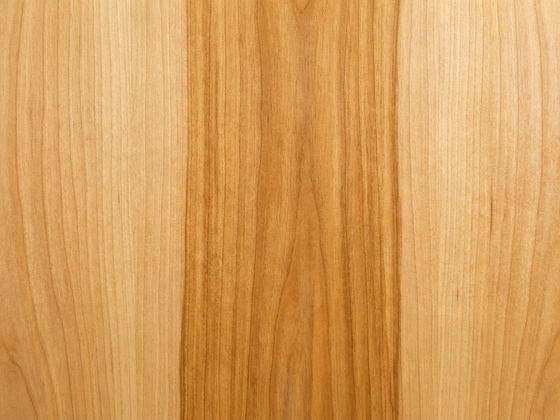
Relative Cost: Economy | Rotary cut (default) or Plain Sliced
Full log with sapwood and heartwood contrast — active, expressive grain that varies door to door. Specify acceptable color range before fabrication. Most economical with rotary cut.

Selecting the right wood veneer for your project starts with understanding how species, face grade, and natural variation shape the finished appearance. The resources below help you connect your design intent with clear specification choices—and set realistic expectations for the installed doors.
Explore eight of the most specified wood veneers, get familiar with natural characteristics, understand what face grades control, and see how color can vary. Whether you’re seeking a quieter, more consistent look or welcoming more natural character, start here to make an informed selection.
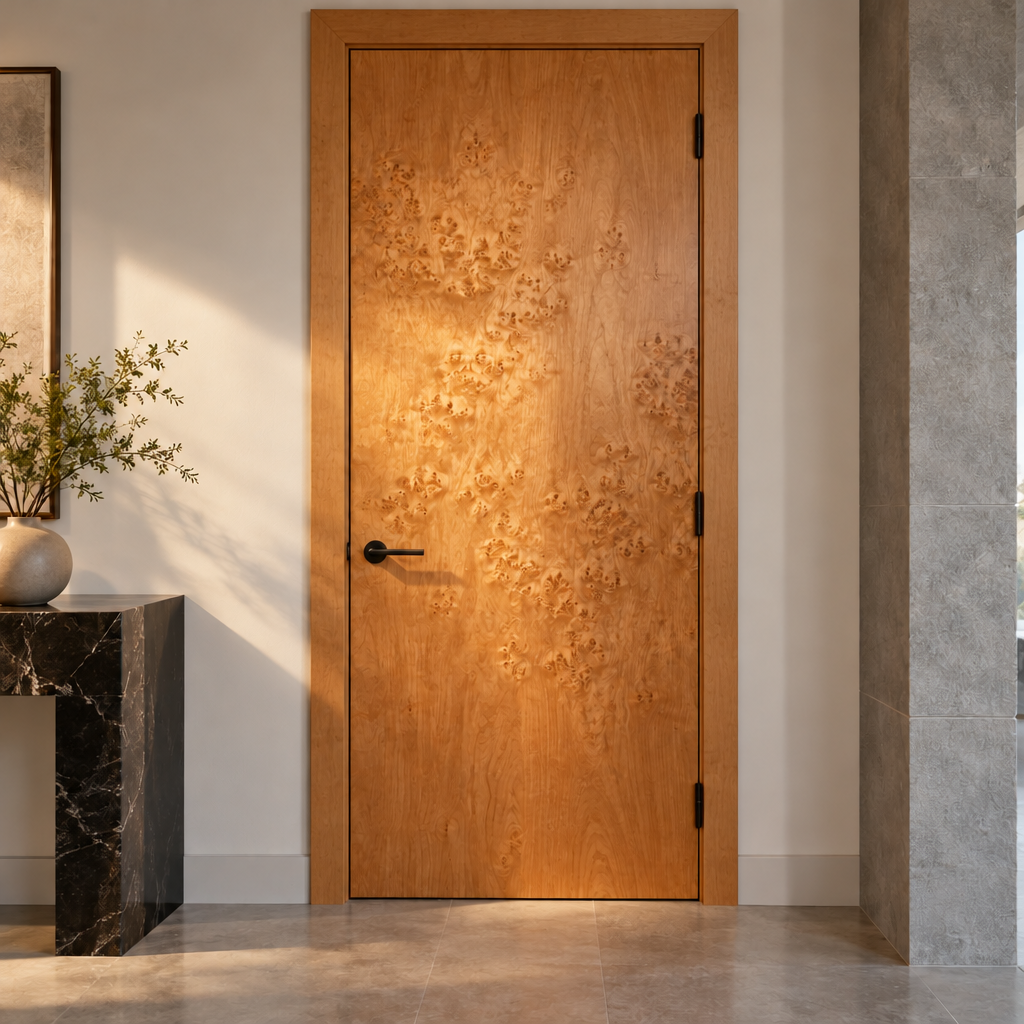
Relative Cost: Economy | Rotary cut (default) or Plain Sliced
Full log with sapwood and heartwood contrast — active, expressive grain that varies door to door. Specify acceptable color range before fabrication. Most economical with rotary cut.
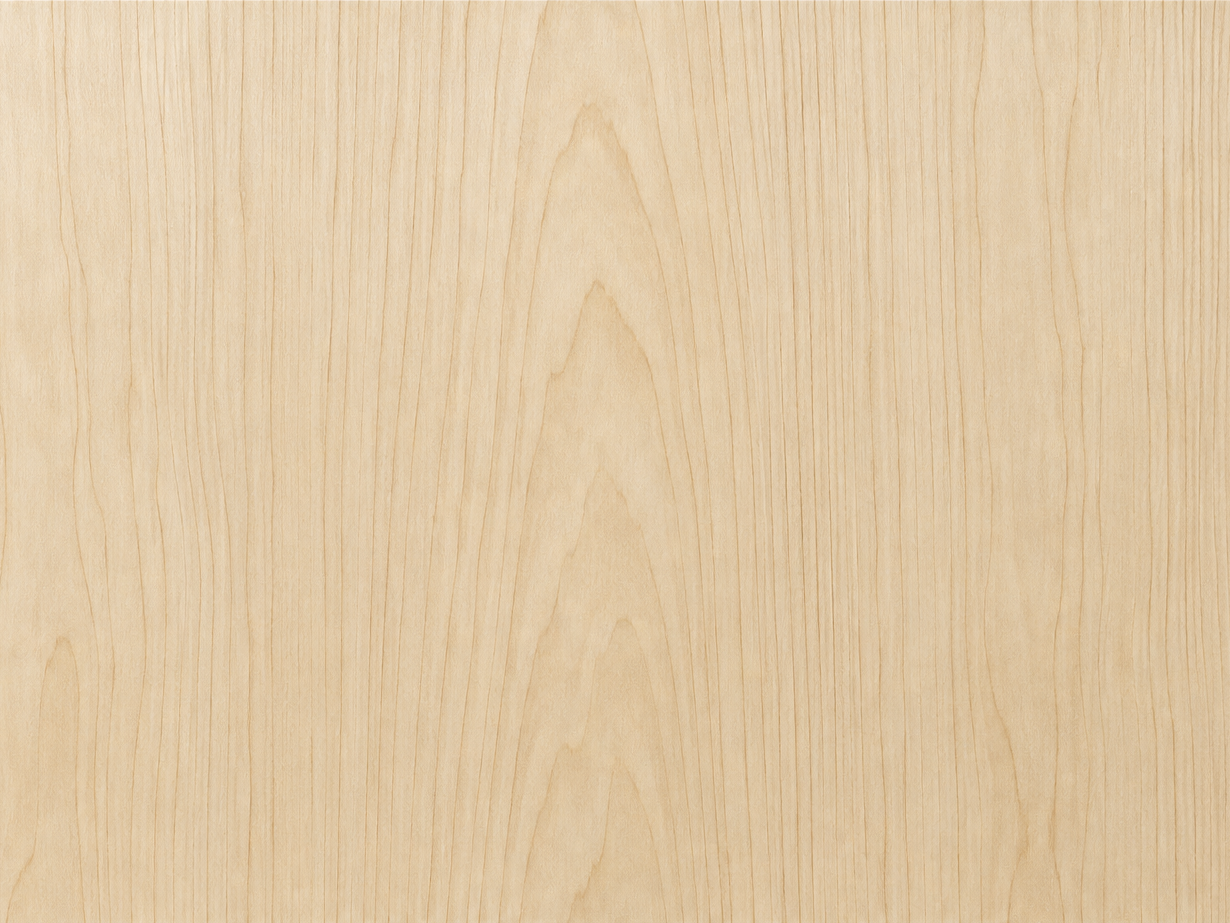
Relative Cost: Economy | Plain Sliced (default), Rotary, or Quartered
Sapwood-selected for a lighter, calmer palette than natural birch. Fine closed-pore surface, generally linear grain. Clear to light stains are lowest risk; factory finishing review recommended.
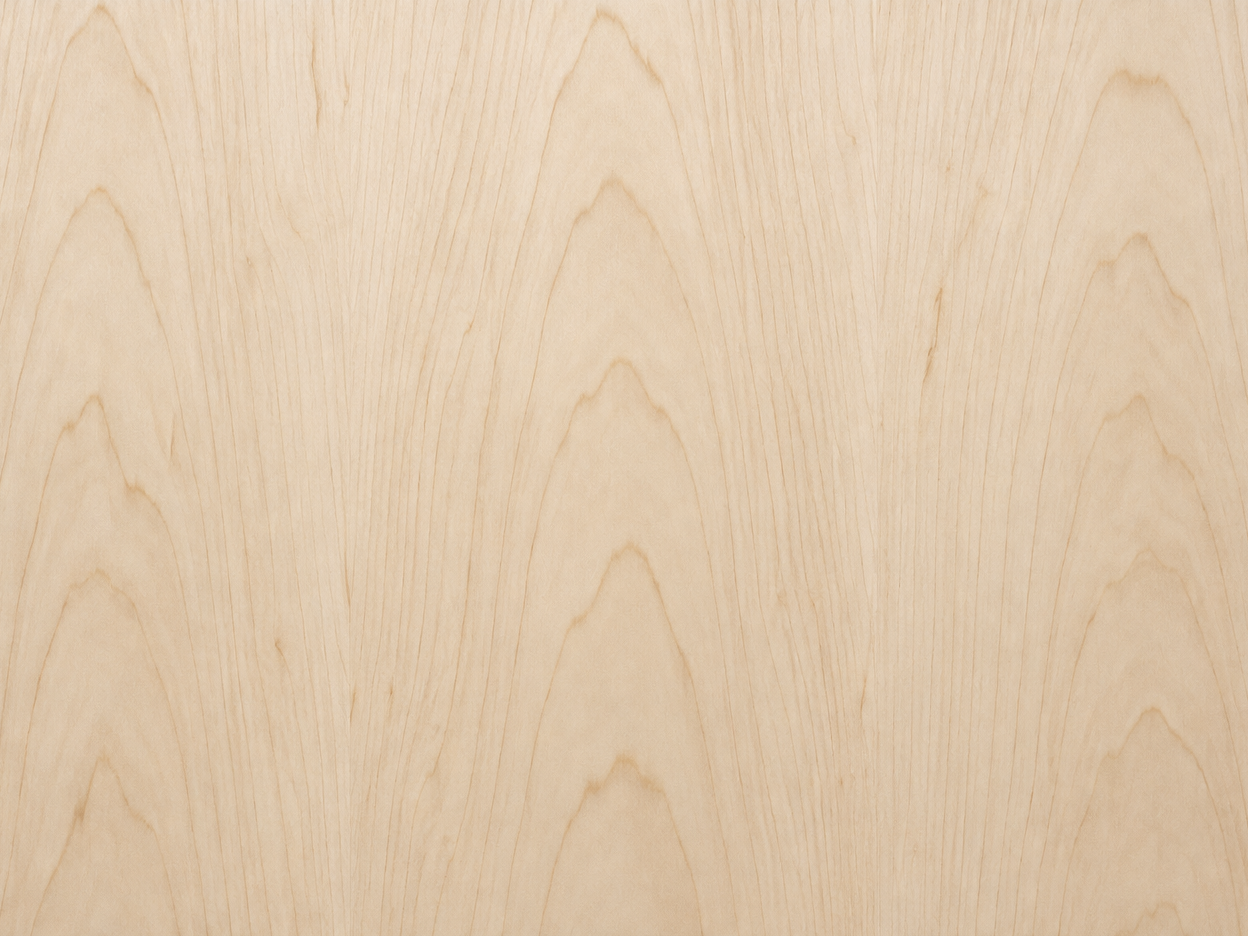
Relative Cost: Economy | Plain Sliced (default), Rotary, or Quartered
Sapwood-selected for a narrow, light golden color range and quiet closed-pore surface. A reliable choice for minimalist and modern interiors. Dark stains are not recommended for this species.
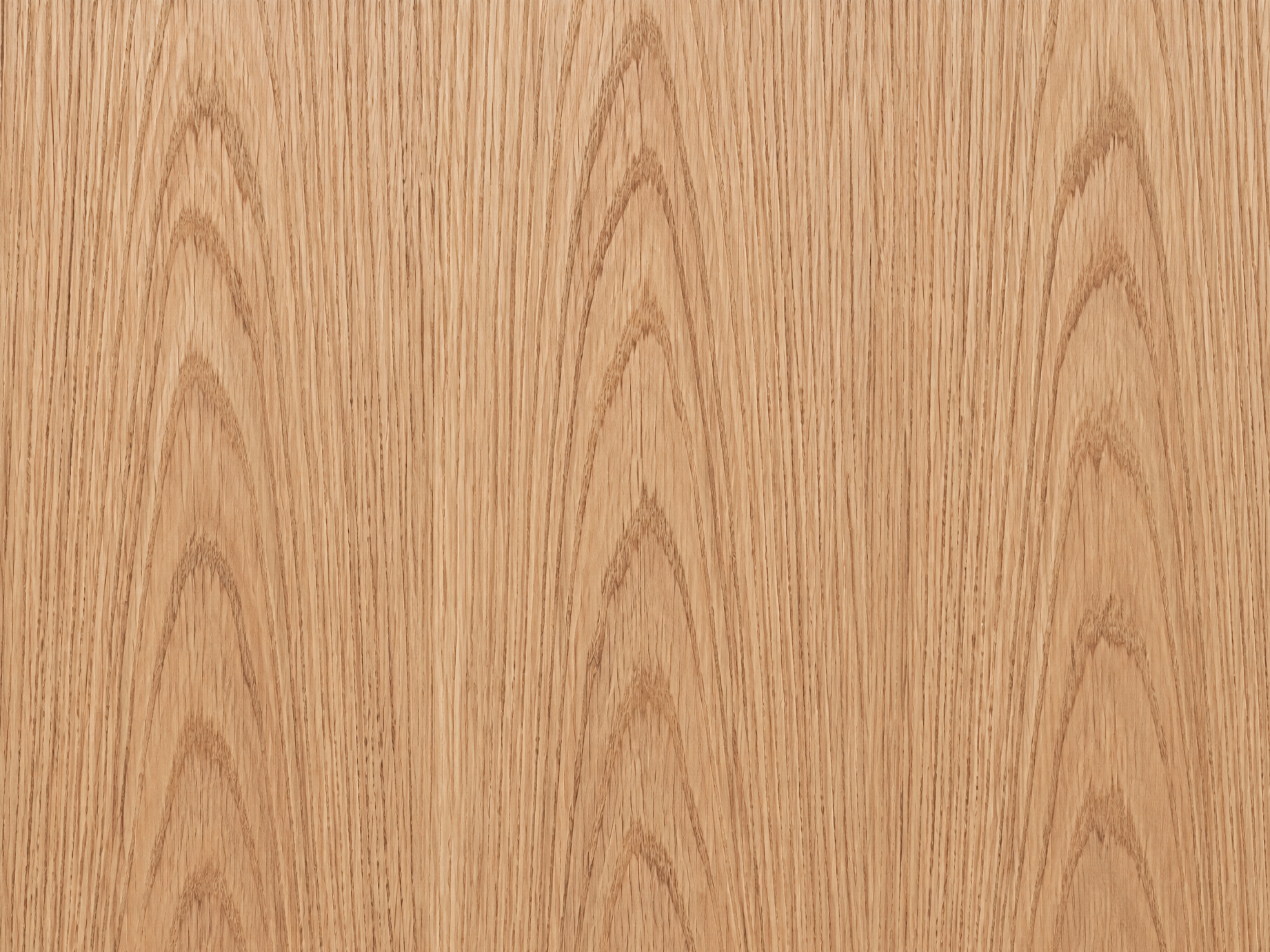
Relative Cost: Economy | Plain Sliced (default), Rotary, Rift Cut, or Quarter Cut
Open, coarse grain reads through any finish. Warm reddish-tan color, pronounced cathedral movement plain-sliced. Specify cut early — it defines the entire visual character of the opening.
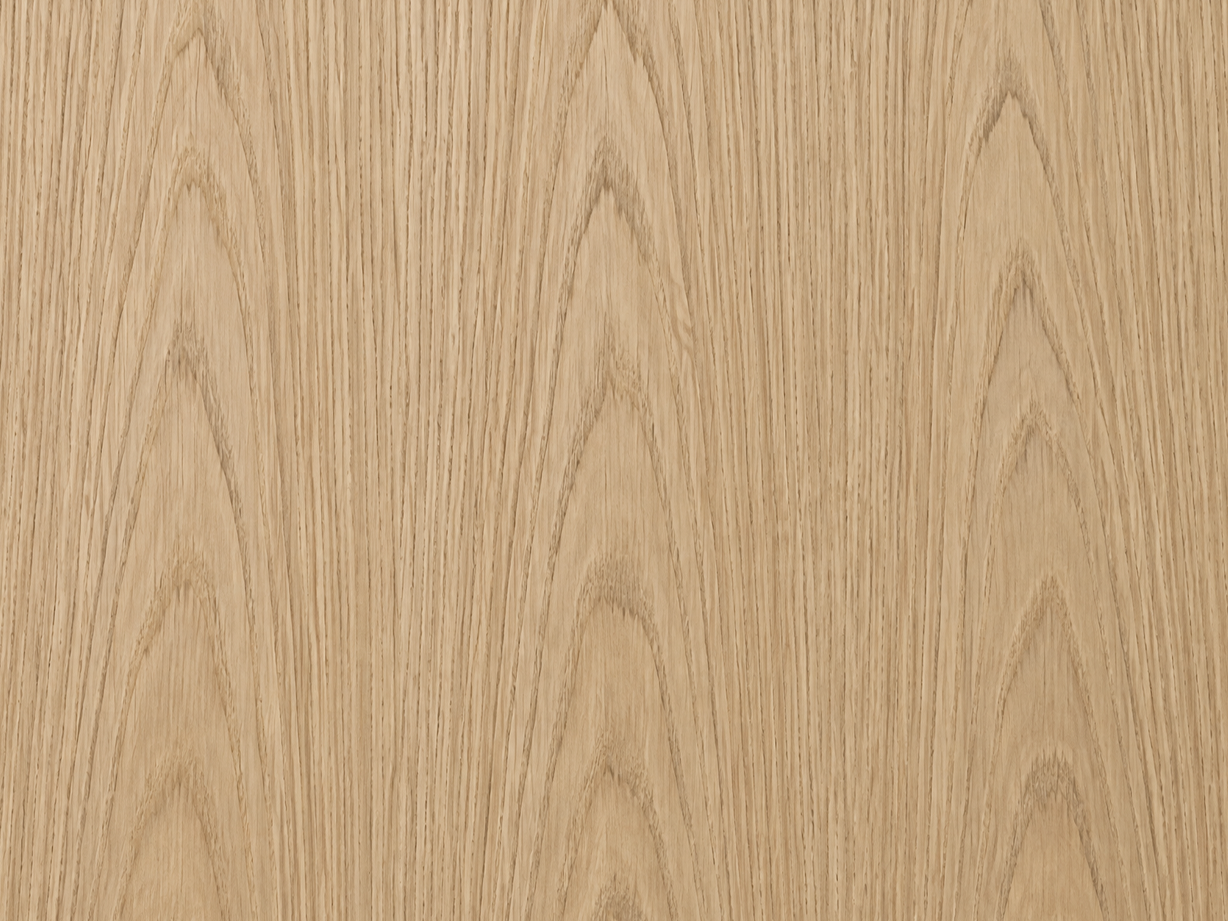
Relative Cost: Moderate | Plain Sliced (default), Rotary, Rift Cut, or Quarter Cut
Contemporary specification standard. Warm neutral tone, four cut options — rift for clean linear expression. Specify ray fleck preference for quarter cut; review finished samples under project lighting.
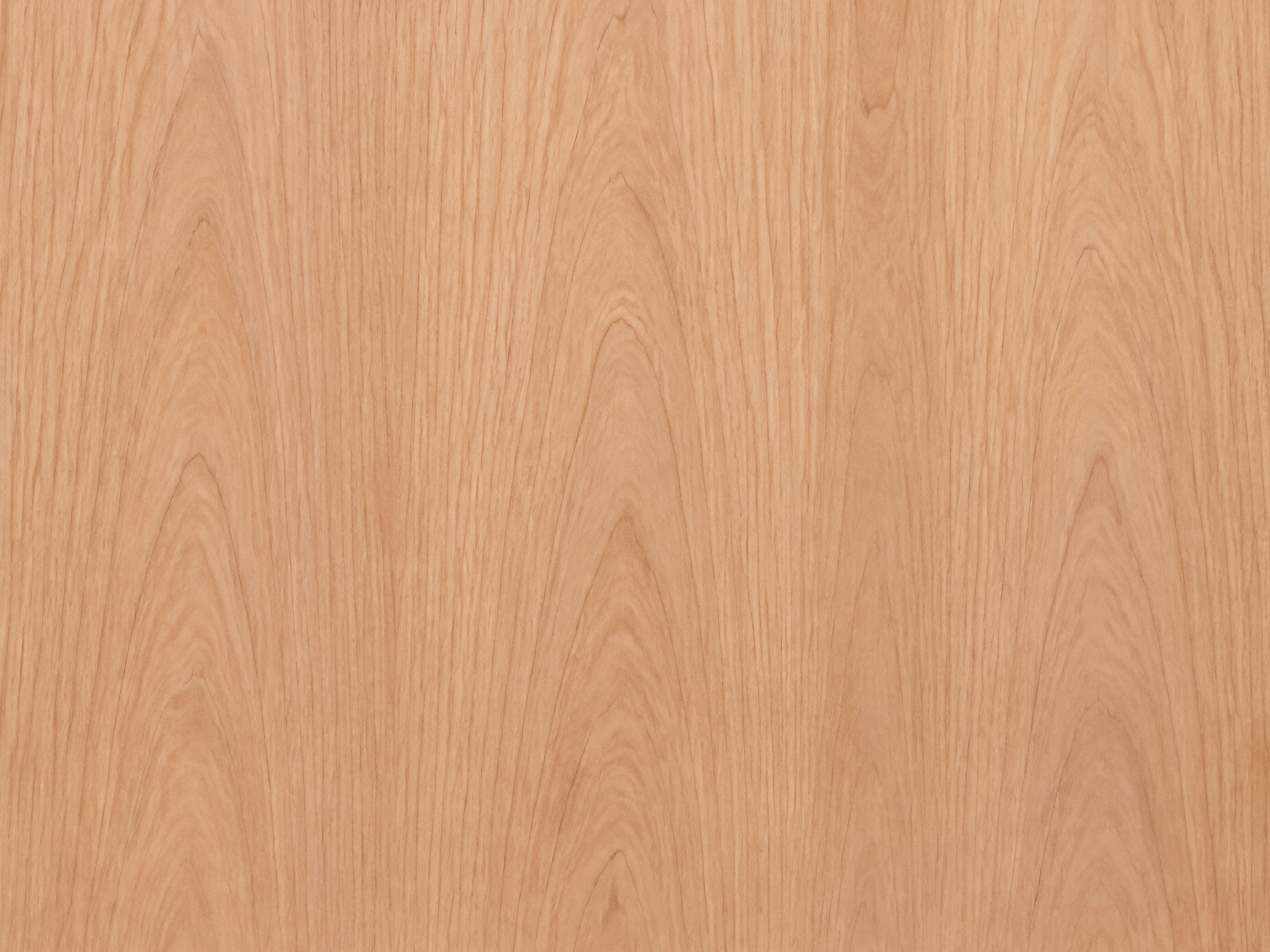
Relative Cost: Moderate | Plain Sliced (default), Rotary, or Quartered
Color deepens significantly after installation with light exposure — a submittal sample will not match installed color. Specify acceptable color range for both phases; a finished mock-up is essential.
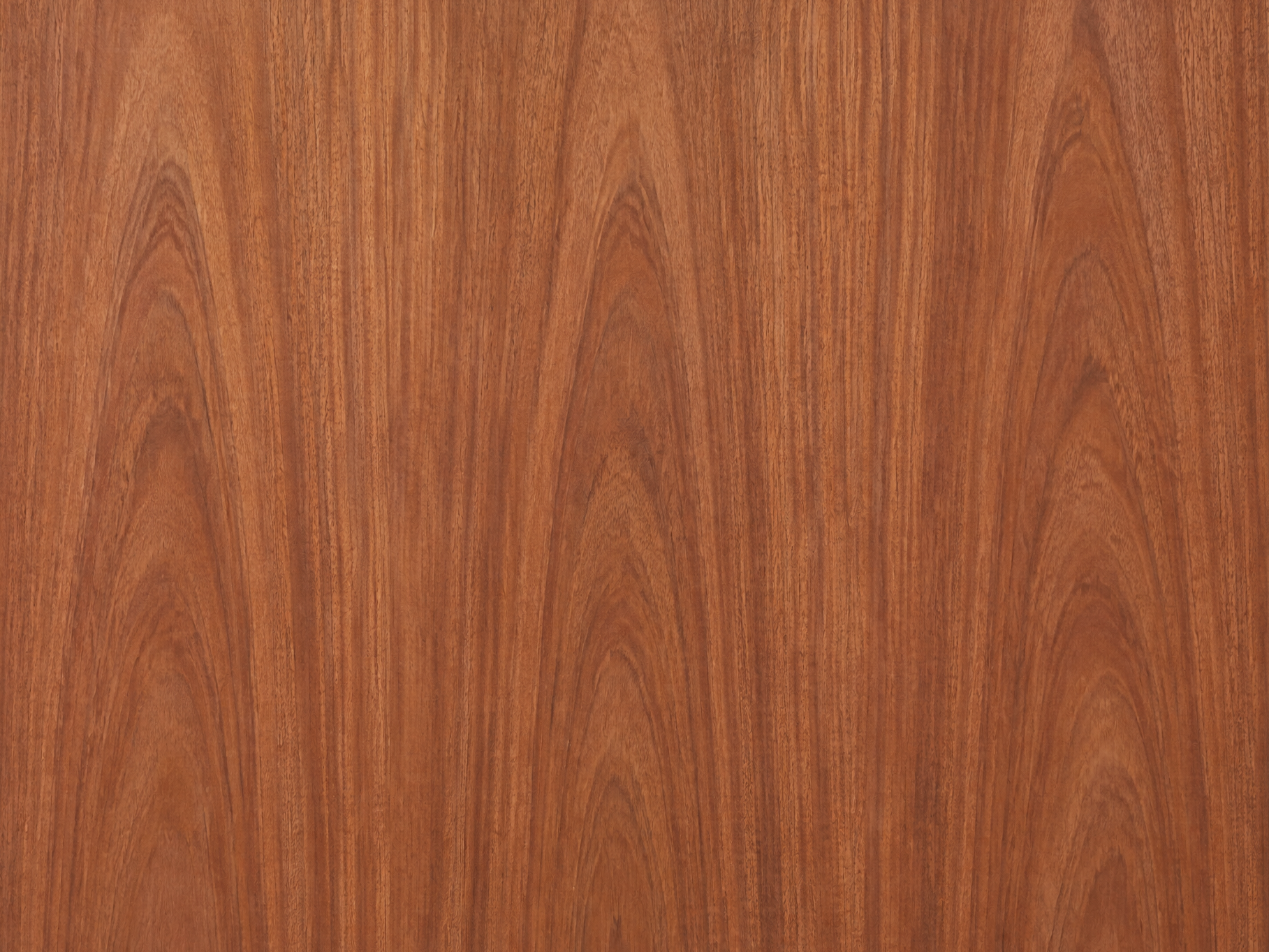
Relative Cost: Moderate | Plain Sliced or Flat Cut (default)
Warm pinkish-brown heartwood that deepens to red-brown with light exposure. Traditional to hospitality interiors. Khaya is CITES Appendix II — confirm sourcing documentation before specifying.
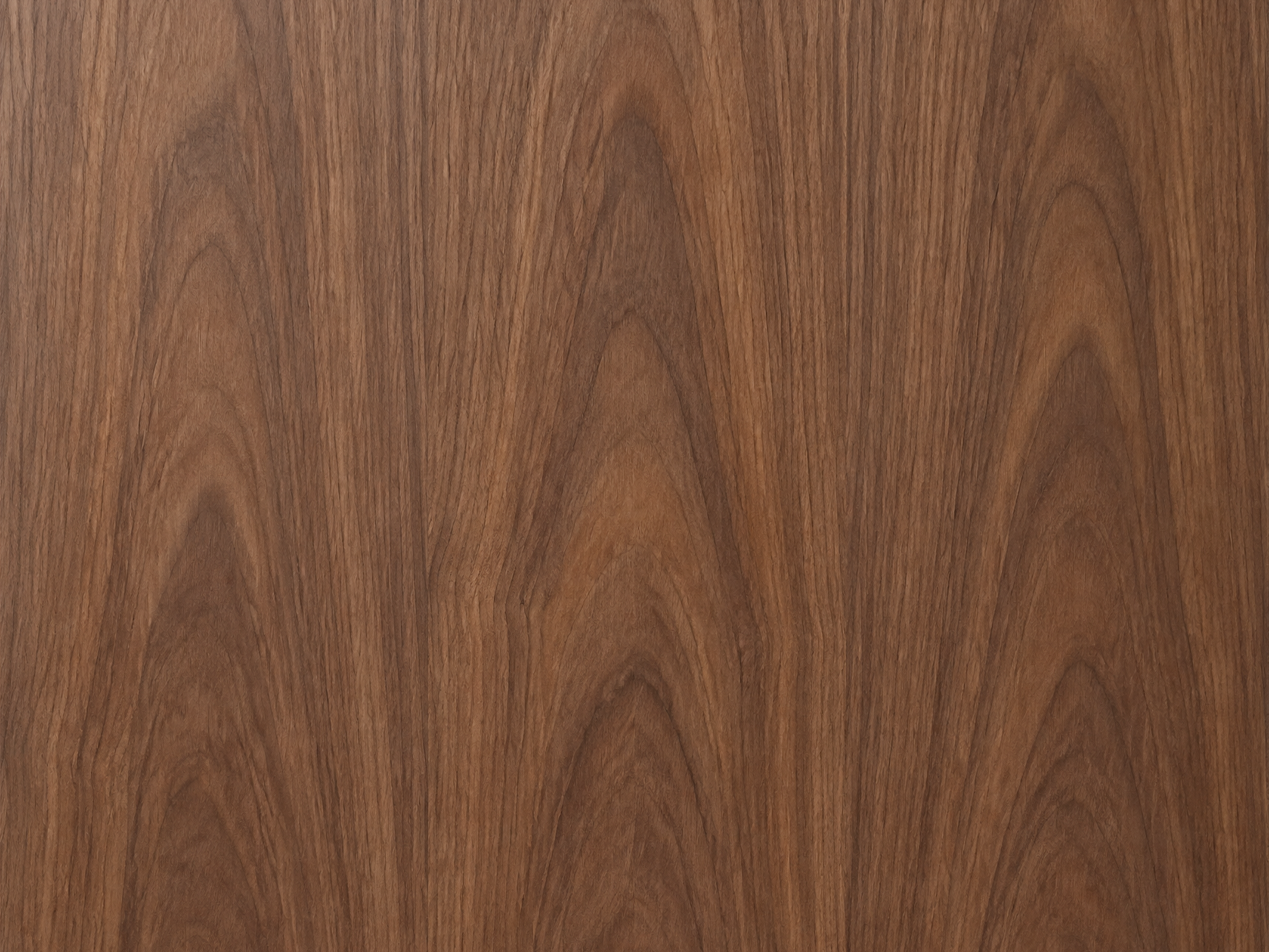
Relative Cost: Premium | Plain Sliced (default), Rotary, or Quartered
Rich layered brown, fine straight grain, closed-pore surface. Define acceptable color variation within the flitch early. Clear UV finish preserves the natural depth that justifies the premium cost.
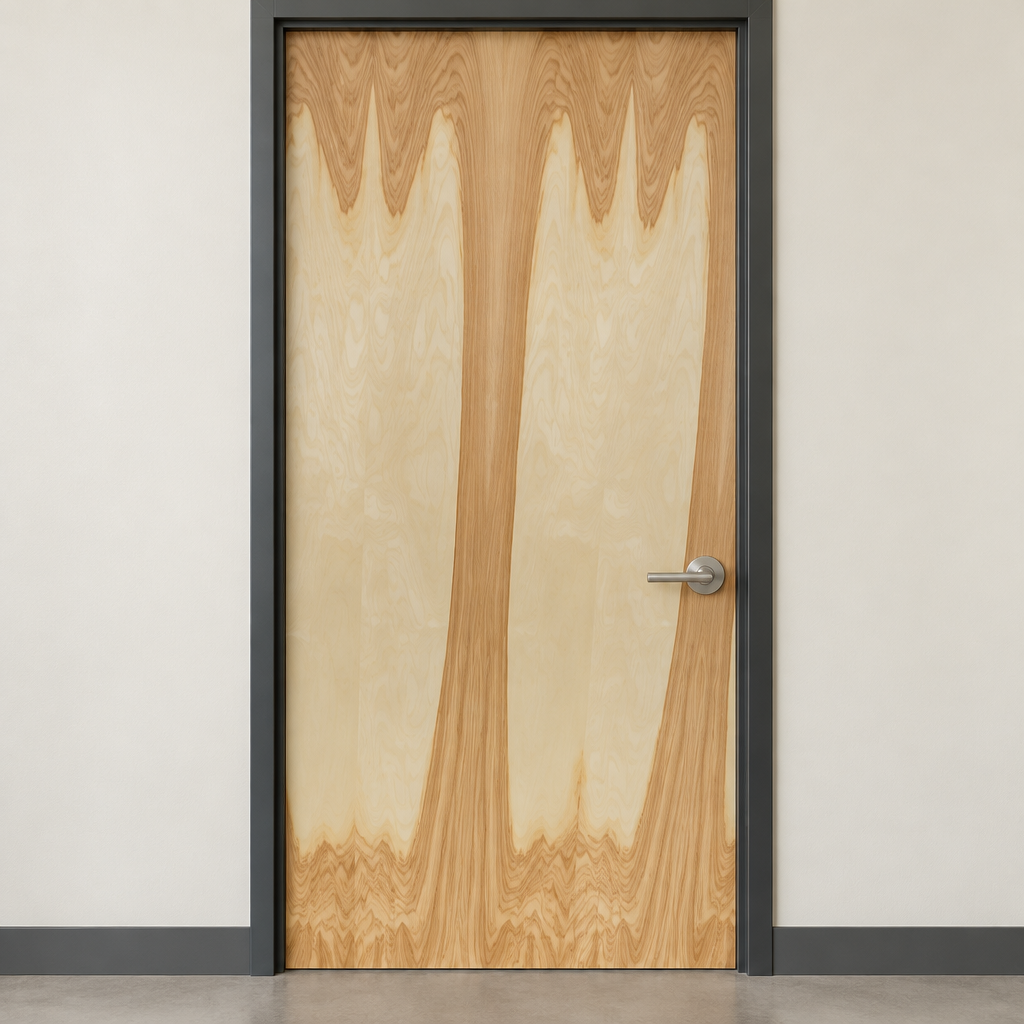
Color variation between light sapwood and dark heartwood is a natural hallmark of real wood veneer — one that can produce unexpected results without the right specification.
Figure — ribbon stripe, bird's eye, curl — can be your most distinctive design move or exactly what you're trying to avoid. Know what you're looking for before you spec it.
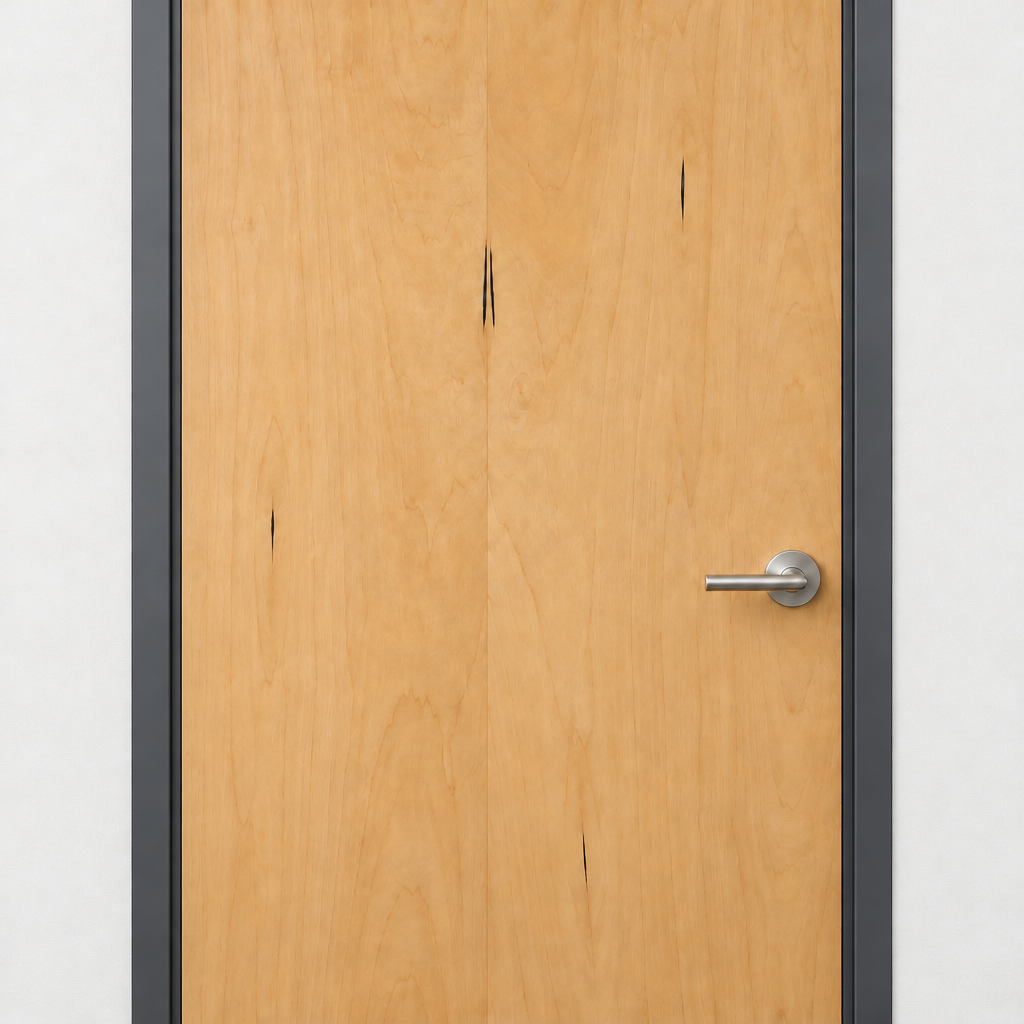
Mineral Streaks — dark linear marks, soil-drawn traces, shadowed accents — bring raw authenticity to light woods, but even Grade A veneer permits a "slight" presence. Know where the standard draws the line before an uninvited streak lands on your showcase opening.
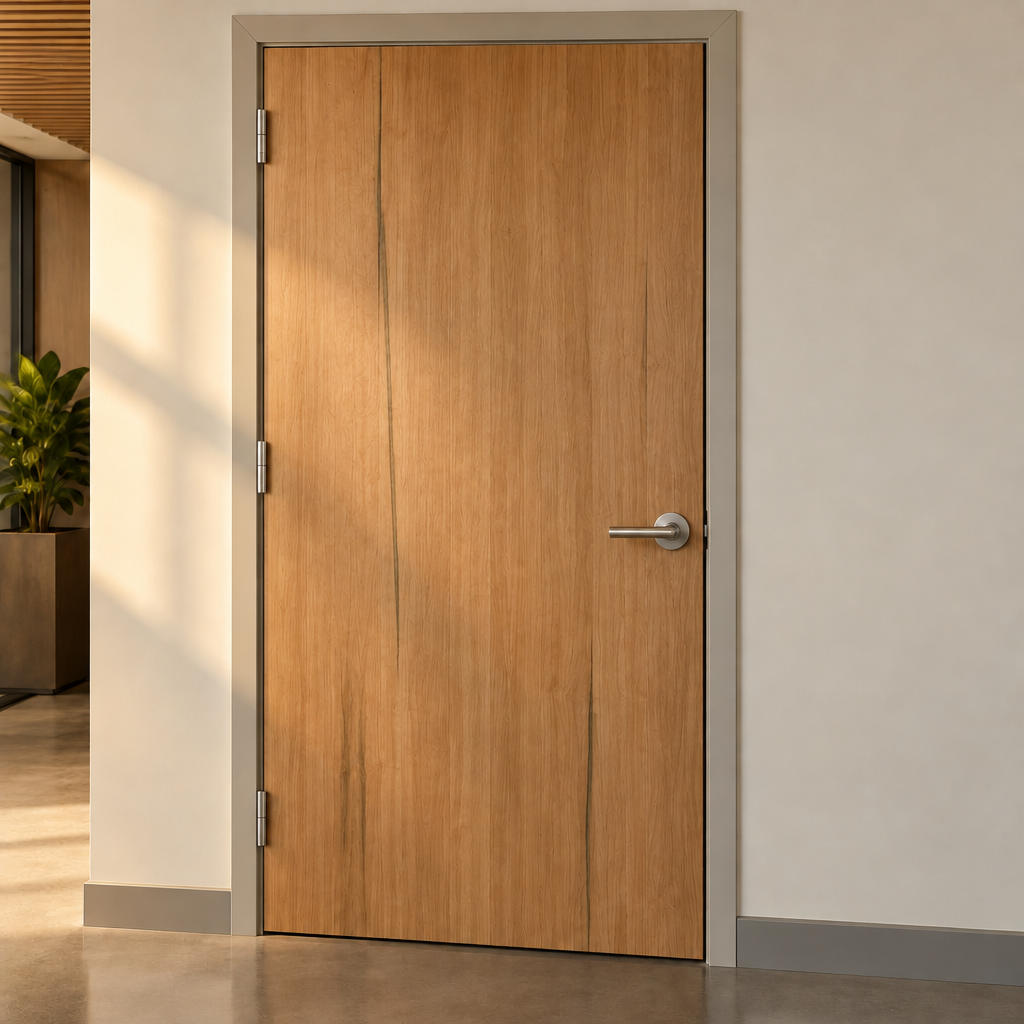
Color Streaks — heartwood transitions, tonal banding, natural contrast — can add rich organic warmth or clash with a seamless, uniform visual plane. Clarify your color expectations in the spec to eliminate surprises on site.
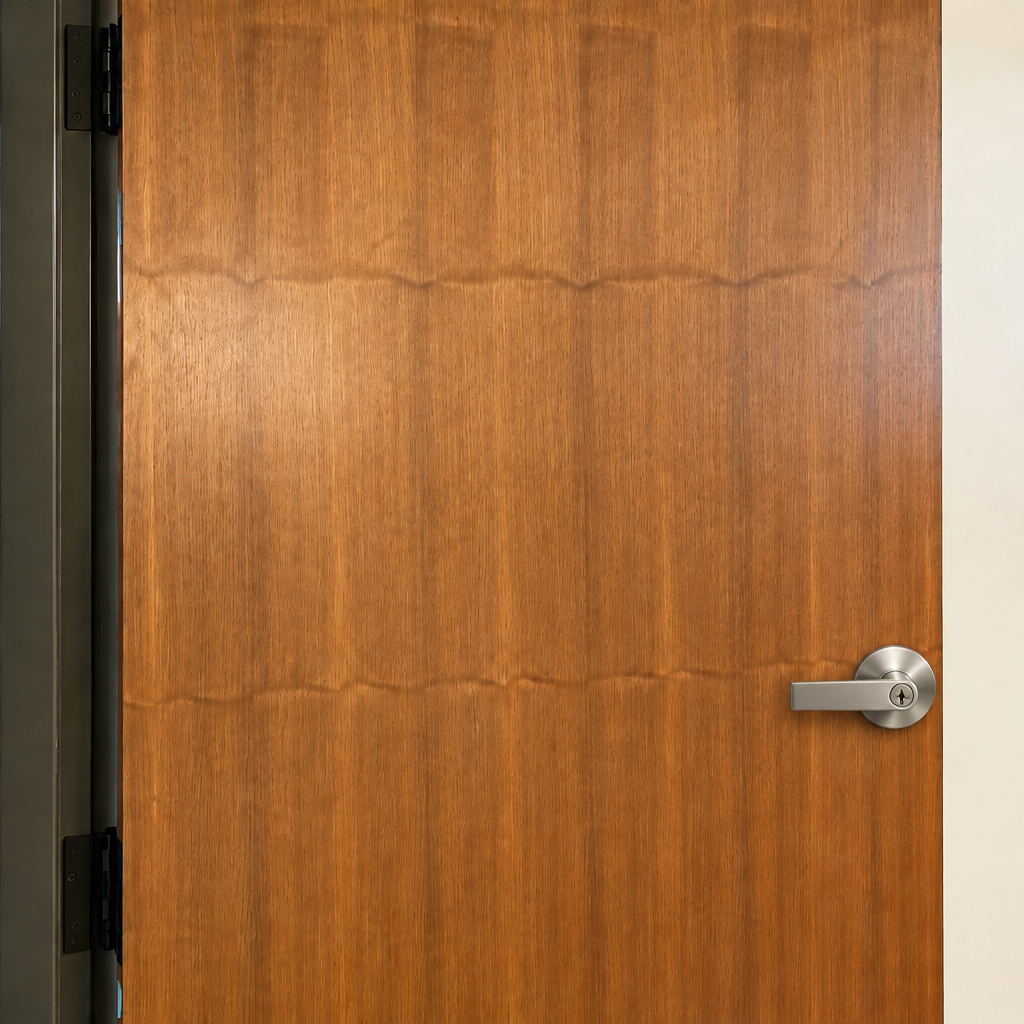
Cross Bars — horizontal banding, grain ripples, perpendicular light breaks — can introduce subtle architectural shimmer or fracture an otherwise clean vertical run. Understand how these grain interruptions behave before approving your flitches.
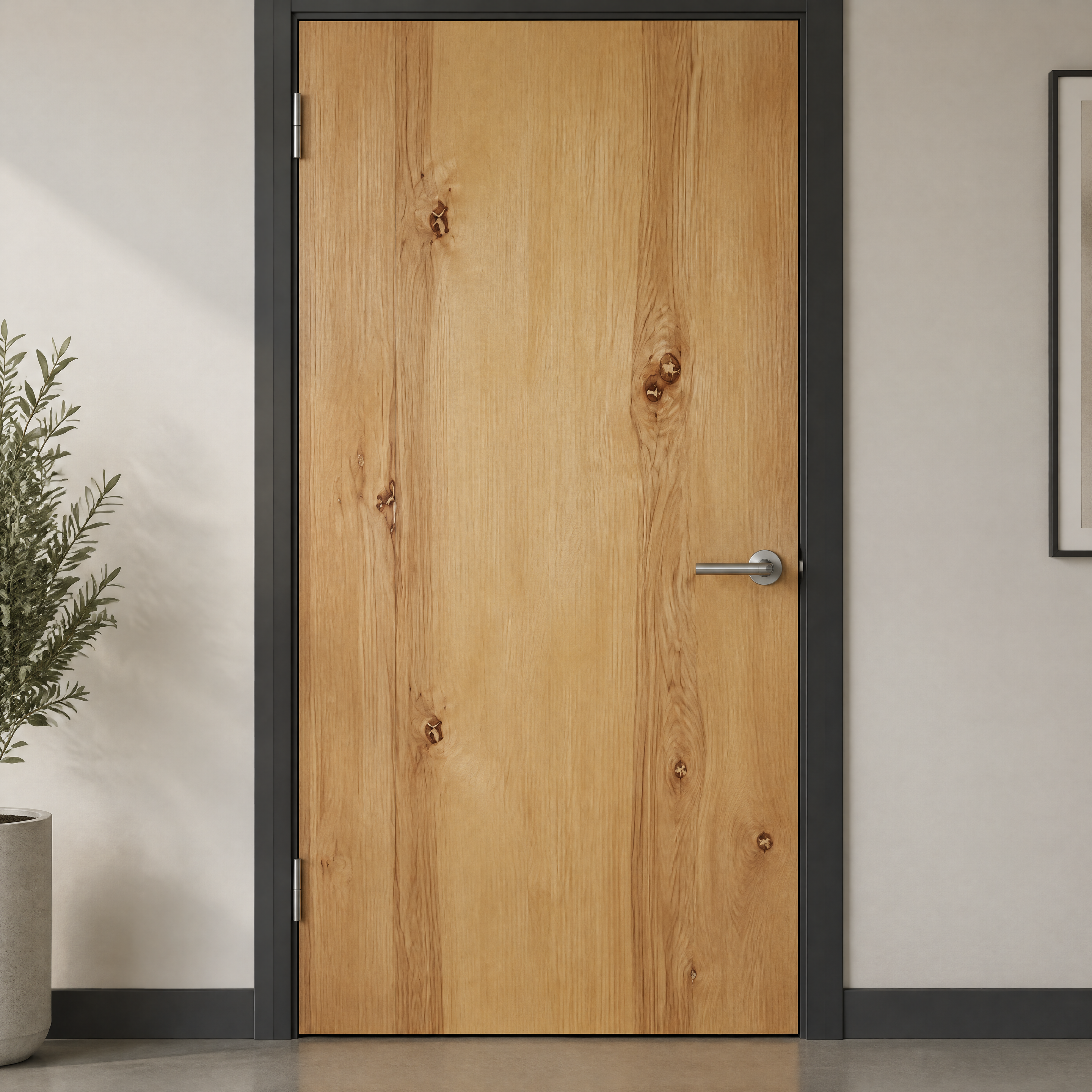
Pin Knots & Burls — swirling eyes, tight clusters, pinpoint character marks — can lend bespoke artisan depth or compromise an ultra-clean, minimalist aesthetic. Learn what sizes and frequencies are allowable before they turn into a punch-list debate.
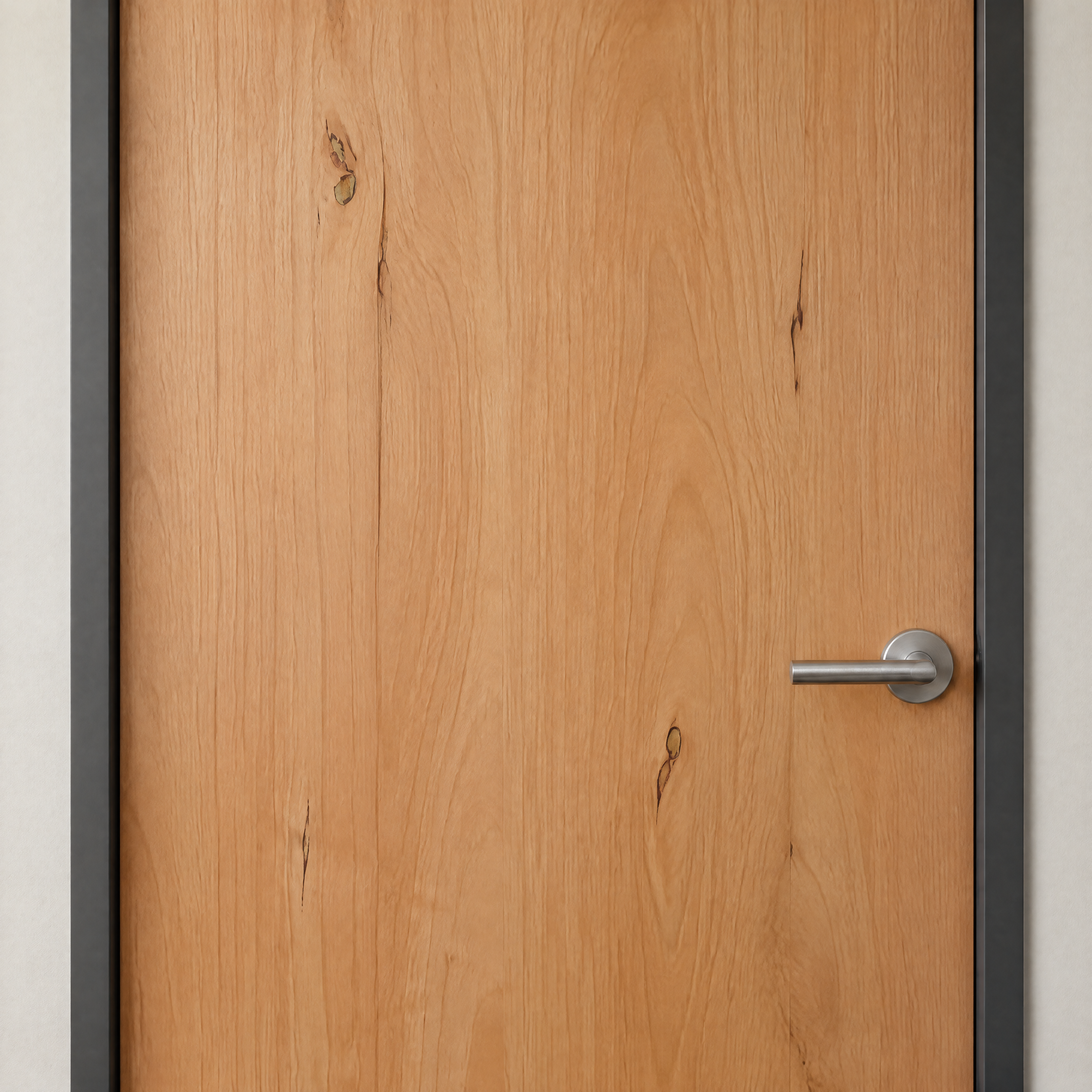
Gum Pockets & Worm Tracks — amber resin channels, healed growth contours, natural scars — tell the authentic life story of species like cherry, but they aren't right for every design intent. Know what the grading rules allow before you sign off on your door faces.
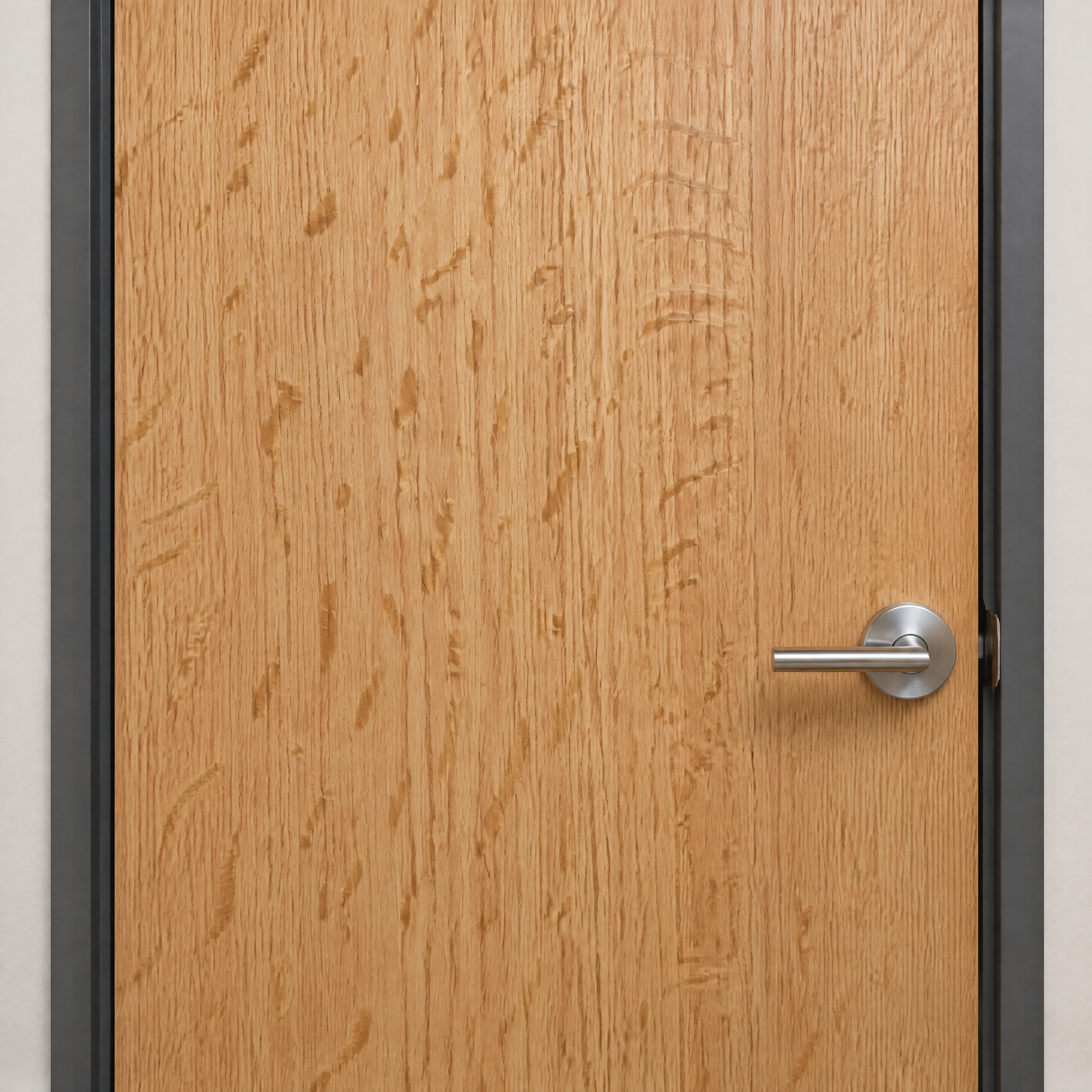
Flake & Fleck — silvery ribbons, mirrored ray flecks, luminous cross-grain flash — can elevate quarter-sawn oak into a premium architectural centerpiece or clash with an ultra-quiet, uniform grain intent. Understand how medullary rays behave before you commit your cut and grade to the spec.
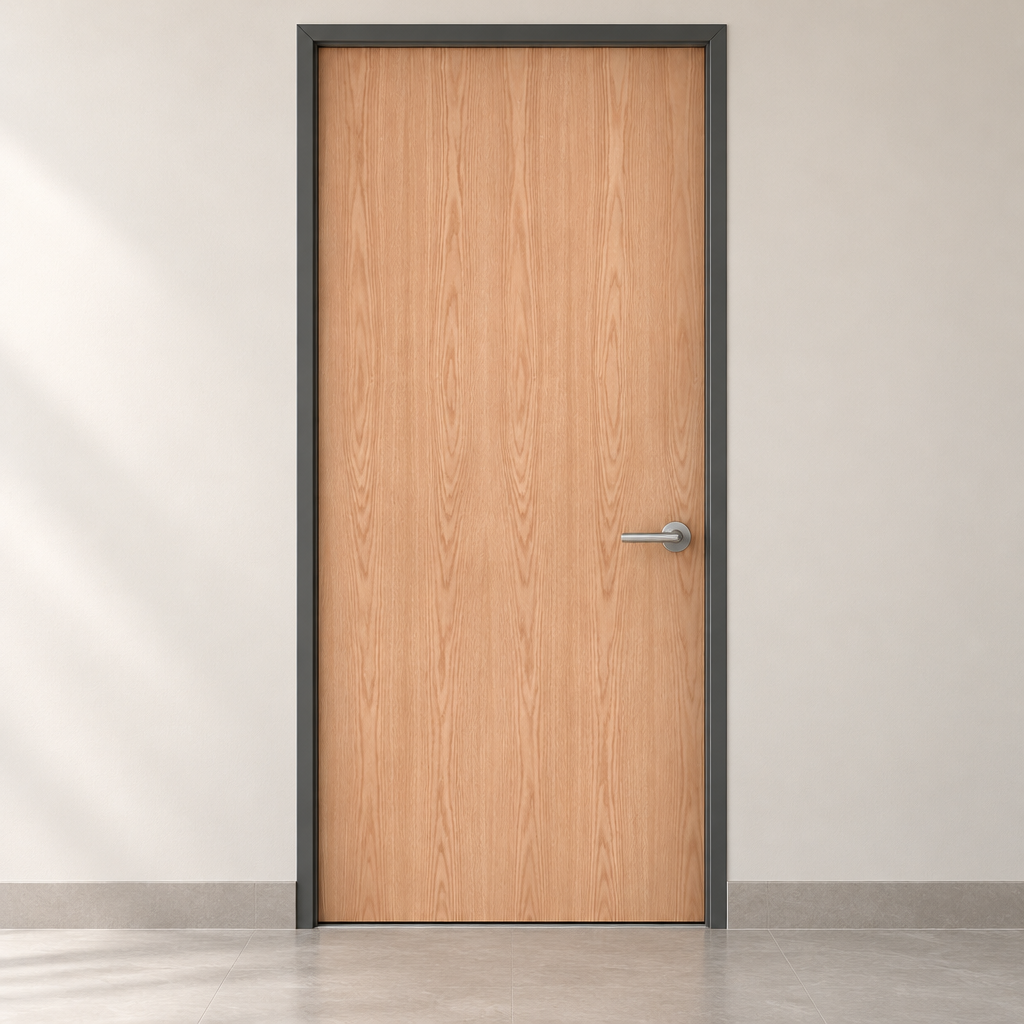
Premium (AA) grade — tighter limits, not identical doors. Grain movement, color variation, and natural characteristics can still be part of the picture. Know what the grade controls—and what it doesn’t—before you spec it.

Custom (A) grade — broader tolerances, reliable availability, the industry default — delivers high-quality architectural wood while welcoming authentic variation and character. Know what you're accepting before silence in the spec decides for you.