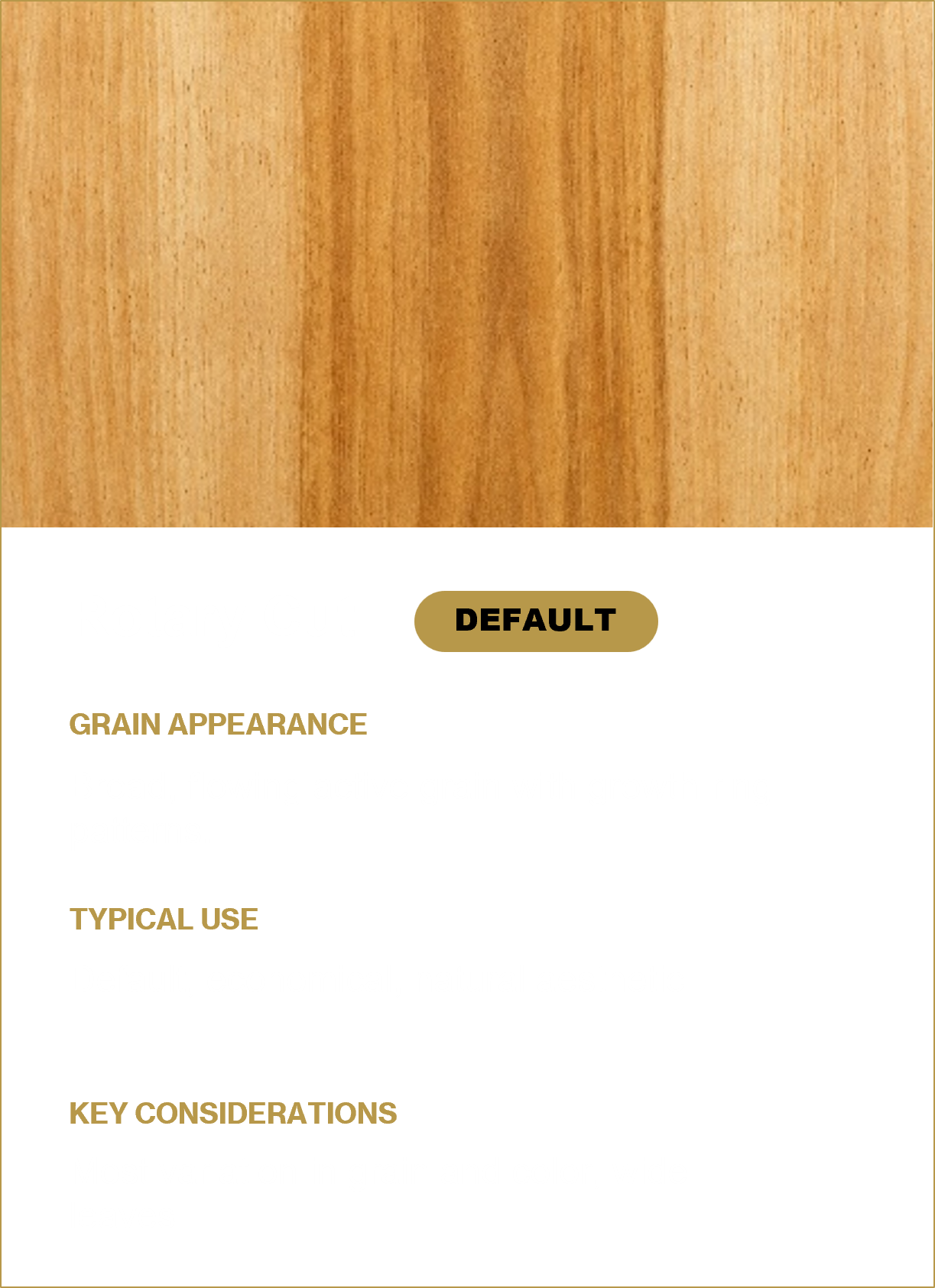
Default standard for education, healthcare, and commercial corridors. Delivers high durability and value with bold, multi-toned grain variation across sapwood and heartwood.
Wood Veneer | Species Overview
Natural birch offers an expressive, varied wood appearance with a fine texture and active, irregular grain — specified where visible natural variation supports the design intent.
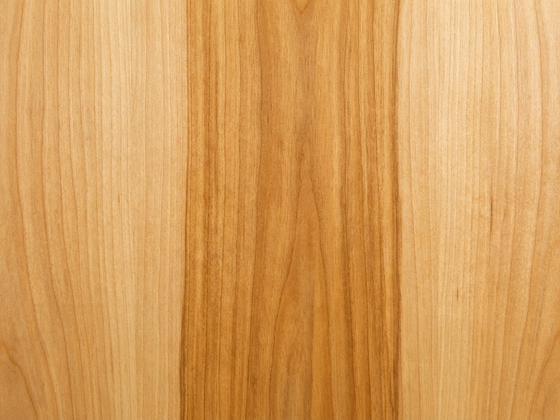
Natural birch offers an expressive, varied wood appearance with a fine texture and active, irregular grain. Colors range from light-to-yellow sapwood to darker brown, sometimes red tinged heartwood, giving each door face a distinctive natural character.
An economical architectural veneer option, natural birch includes both sapwood and heart wood in standard faces, with grain and tone varying from leaf to leaf. Natural characteristics may include color and mineral streaks, worm tracks, small burls or pin knots, figure, cross bars, and barber-pole effects. These variations support designs that embrace the wood’s natural character.
Texture | Fine, smooth |
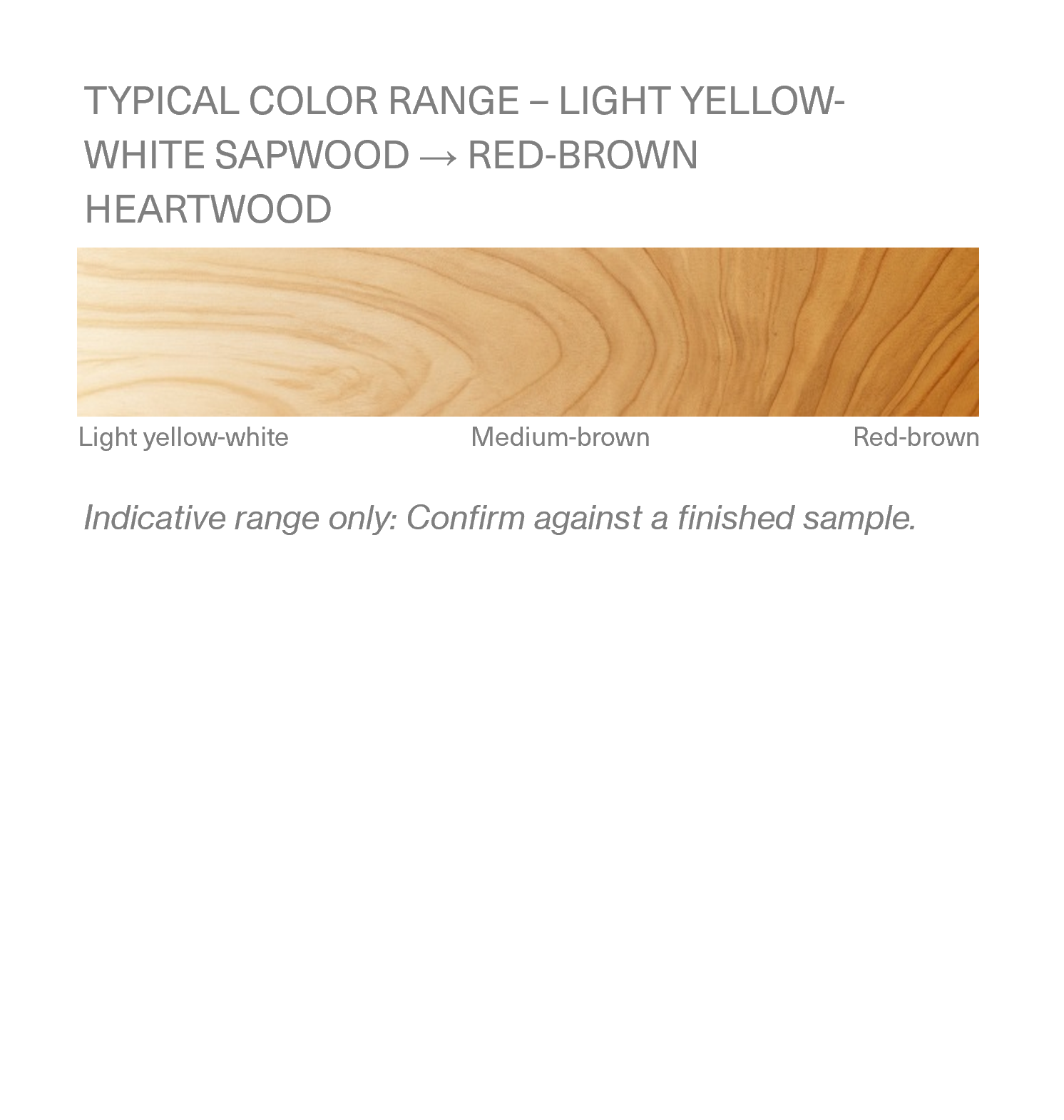
Color range | Light yellow-white to red-brown |
Cuts available | Rotary (default), Plain Sliced, Quartered |
Relative cost | Most economical range |
Watch for | Sapwood contrast, stain patching |
Two woods in one species — light sapwood against darker heartwood
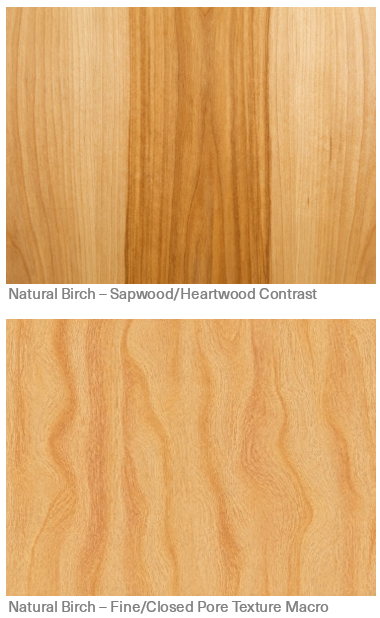
Natural birch presents a broad color range because it includes both sapwood (light, yellow-white) and heartwood (medium to darker brown, sometimes with reddish tones). Contrast. The contrast between these two zones can be pronounced — within a single door face, from door to door, and after finishing. It is inherent to the species and is not controlled by grade alone. Aging. Natural birch does not change dramatically with age but may show slight yellowing or darkening of light areas over time.
⚠ SPECIFICATION NOTE
Do not specify Natural Birch where uniform light color is essential. the sapwood-heartwood contrast is inhedrent to the species and will be visible through most finish systems. Where a lighter, more consistent appearance is the goal, specify White Birch instead.
Fine and smooth to the touch, active and irregular to the eye
Natural birch has a fine, smooth texture and an active, irregular grain. The grain pattern on rotary-cut veneer is broad and flowing — less linear than sliced cuts. Grain direction and density vary across the leaf, which can affect how stain is absorbed and reflected, causing different-looking areas on the same face. Because the default cut is rotary and the default match is book match, adjacent leaves are mirrored. Where sapwood and heartwood alternate between leaves, a barber-pole effect may appear. It is a natural result of the match, not a fabrication defect.
Grain density drives how stain lands.
Grain density variation across the leaf can cause stain to absorb differently in different areas — producing localized lighter and darker patches on the same face. Evaluate on a finished 8" x 10" sample.
Default standard for education, healthcare, and commercial corridors. Delivers high durability and value with bold, multi-toned grain variation across sapwood and heartwood.
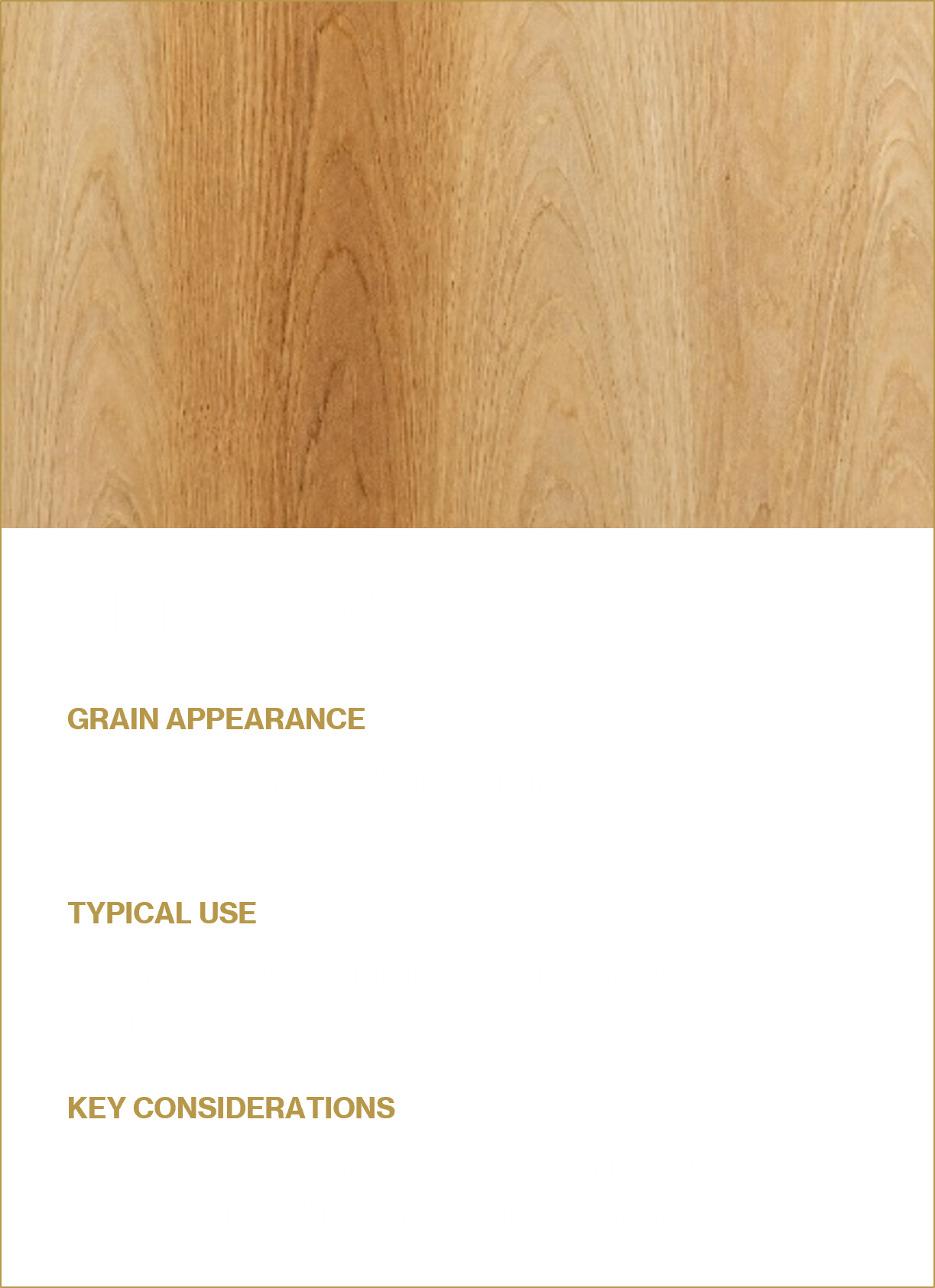
Specified for hospitality, corporate suites, and multifamily projects desiring classic cathedral grain. Anticipate prominent two-tone color contrast across spliced leaves.
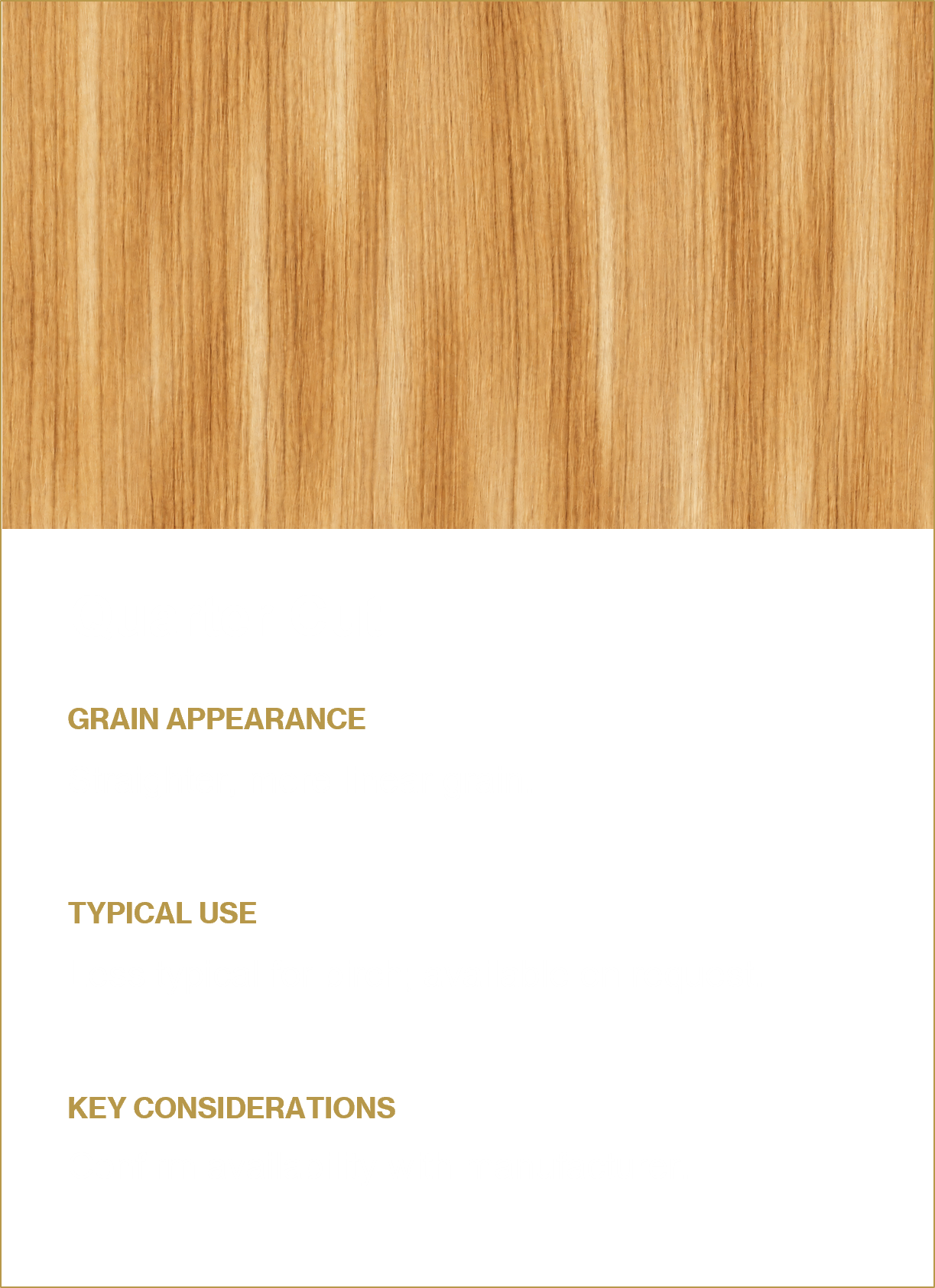
Special-order cut for linear, contemporary aesthetics with a subtle ribbon figure. Confirm mill availability and lead times early during design.
These are inherent to the species. Their acceptance is governed by the applicable WDMA face-grade table together with the project's approved visual standard.
CHARACTERSTIC | APPEARANCE | GRADE CONSIDERATION |
|---|---|---|
Sapwood / Heartwood Contrast | Light to dark contrast across face or between doors. | Inherent to "natural" specification, define acceptable range explicitly. |
Color Streaks | Subtle linear tone shifts. | Allowable by grade. |
Mineral Streaks | Faint darker lines. | Allowable by grade. |
Worm Tracks | Fine, wavy dark lines. | Allowable by grade; may be limited at AA. |
Small Burls / Pin Knots | Small circular features. | Grade-controlled; confirm acceptable size and frequency. |
Figure | Irregular grain movement. | Not grade-controlled; may appear in rotary and plain-sliced faces. |
Cross Bars | Faint horizontal bands crossing grain direction. | Natural; cannot be fully eliminated. |
Barber-Pole Effect | Alternating light/dark leaves in book match. | Result of book matching rotary veneer; not a defect. |
See visual examples of the various natural characteristics.
Maximum visible variation. Sapwood and heartwood contrast is fully exposed, and grain density differences are emphasized across the face.
Highest visible variation – Use only when variation is intentional.
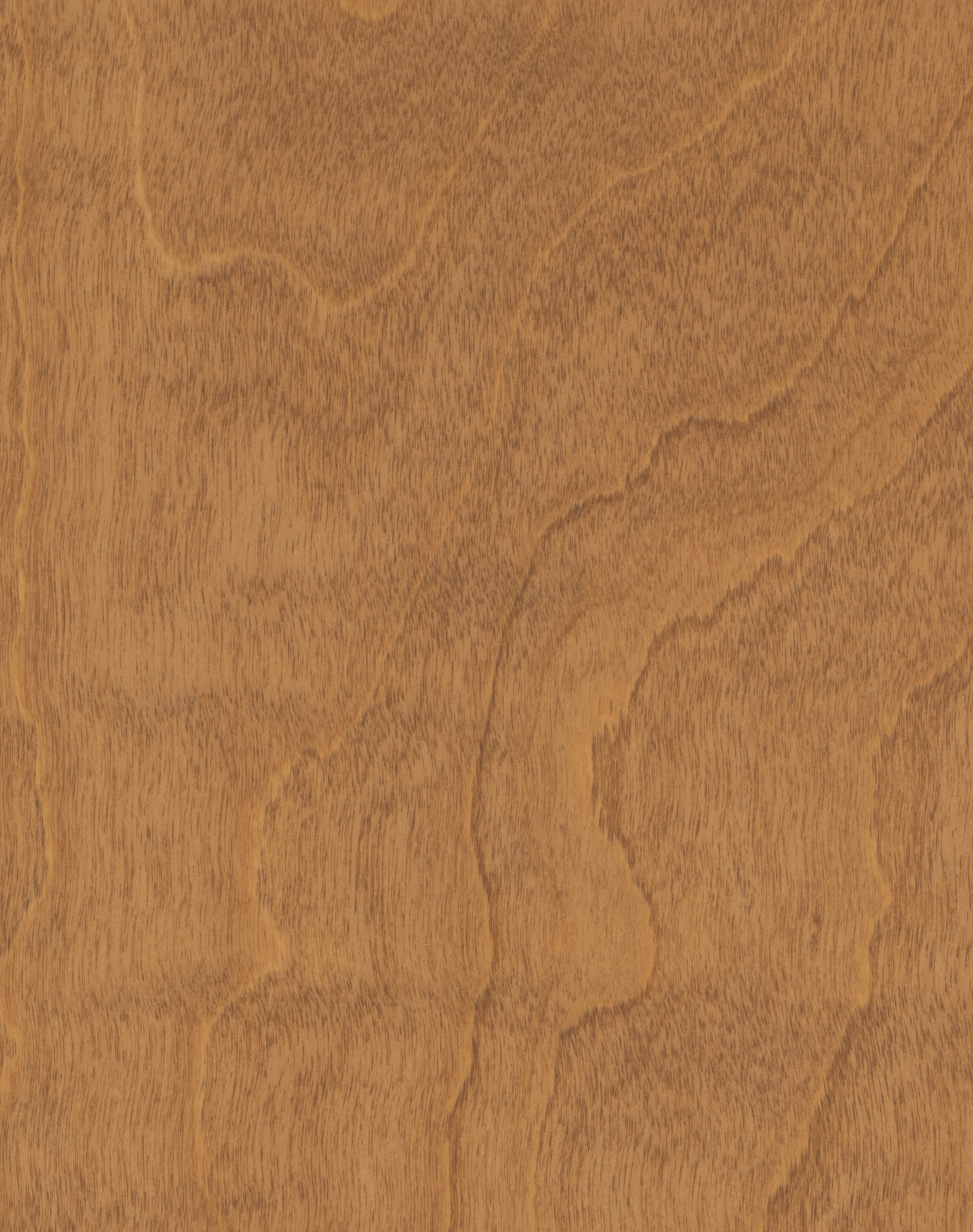
Reduces visible contrast between lighter and darker areas. Still a higher-risk result on this species — approve on an 8”x10” finished sample.
Modest control – Sample approval required.
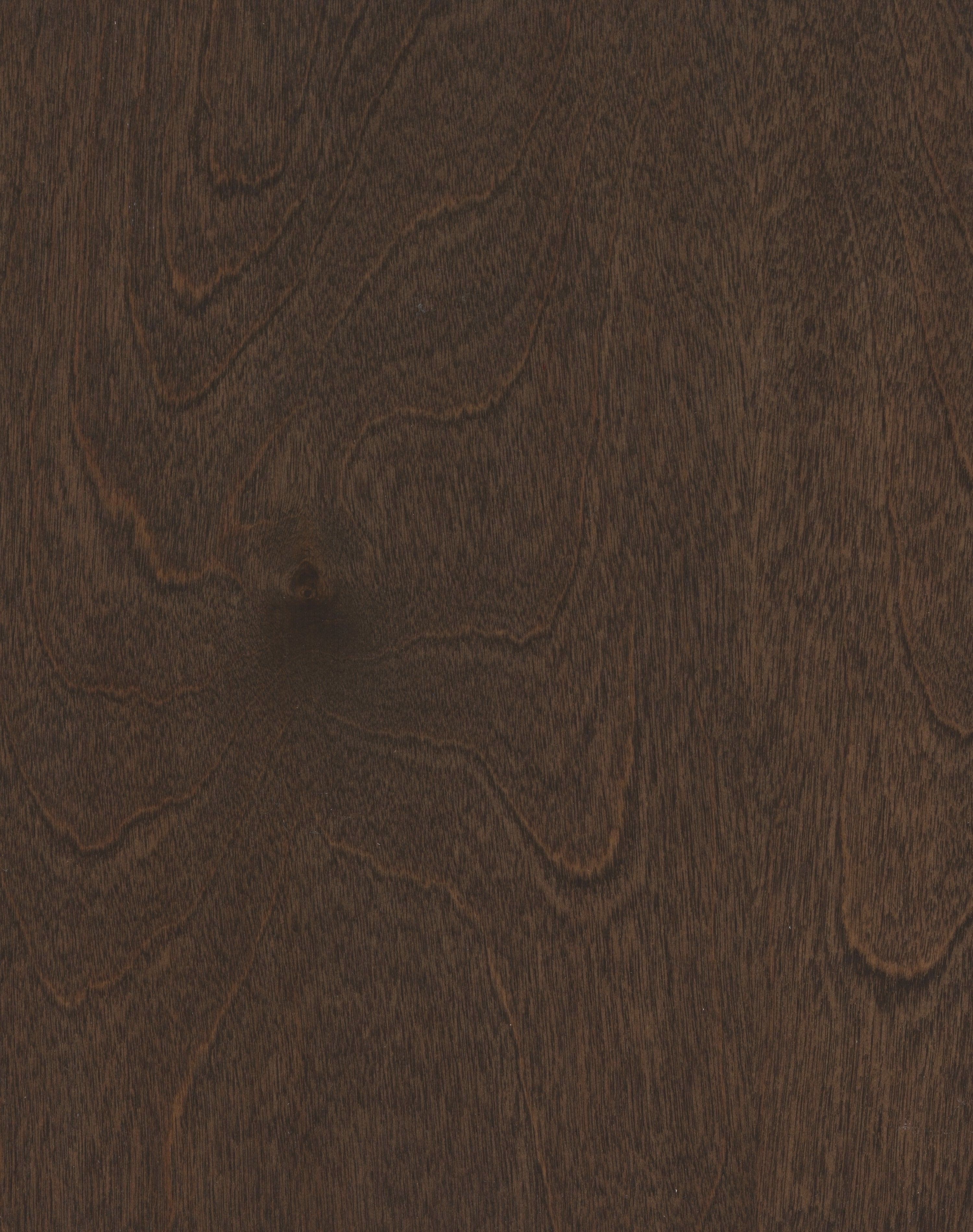
Most effective at minimizing sapwood-heartwood contrast and grain density variation. Recommended when appearance consistency is the goal.
Greatest color control. Recommended for consistency.
01
The proportion of sapwood and heartwood varies within a single log and from flitch to flitch. Grade defines the permissible limits of characteristics — it does not eliminate the color contrast between lighter and darker zones.
Recommended response
Define the desired color range and acceptable sapwood heartwood balance explicitly in the project specification. Review a finished, 8"x10" sample or mock-up before finalizing for any application where consistency matters.
02
If the design intent is a light, consistent wood palette, natural birch is the wrong species choice. The contrast between sapwood and heartwood — and the irregular gain density — will produce a more varied appearance than most light species expectations.
Recommended response
Specify White Birch where sapwood-only color consistency is the priority If natural birch is required, set explicit expectations with the project team before material is selected or samples are reviewed.
03
Because rotary cut natural birch has varying grain density across the leaf, stain may absorb differently in different areas – causing localized lighter and darker patches on the same face.
Recommended response
Evaluate stain on a finished 8”x10” sample – not a 2”x4” sample. Medium-to-dark stains reduce but do not eliminate this effect. Approve results before production begins.
Download the WDMA Face Grade Table, order a sample on the species you're considering, or talk with a Forte rep before the spec is locked.