Natural Characteristics of Wood Veneer
Natural Characteristics: Grain & Figure
Explore how slicing methods, fiber orientation, and light interaction reveal figure, cross bars, and ray fleck across the face.
- Figure
- Cross Bars
- Ray Fleck
- Flake
Overview
Figure, cross bars, and ray fleck bring texture and movement to a veneer face through patterns that may run along or across the grain. Some are intentionally selected for their decorative effect; others appear without being specified. Explore how cutting methods reveal these features, how they interact with light, and what to clarify when the design calls for either a subdued or expressive appearance.
At-A-Glance
What Face Grade Controls | What Face Grade Does NOT Control |
|---|---|
Which natural characteristics are permitted (and at what size or frequency) | Overall color tone, undertone, or sapwood-to-heartwood ratio |
Species-specific allowances for features like pin knots, mineral streaks, and gum pockets | The prominence of figure, ray fleck, or cross bars |
A defined quality threshold — not a definition of appearance uniformity | Visual differences created by matching method, assembly method, lighting, or finish |
"Specifying AA instead of A narrows the permitted characteristics — it does not define the appearance."
Grain & Figure
Figure
Figure is a distinctive visual pattern created by variations in wood grain structure and the way veneer is cut. It may be intentionally specified for a particular design effect, but can also occur naturally when not requested. Figure is not graded by the WDMA face-grade table; specifying a face grade does not establish its presence, absence, or intensity.
TYPICAL APPEARANCE
Figure may occur in localized areas or across an entire door face. Its type, intensity, and distribution can vary between doors—even within the same species, cut, and finish.
Curly or fiddleback figure: Wavy grain creates a rippled appearance, often resembling closely spaced bands.
Bird’s-eye figure: Small, rounded markings create scattered eye-like patterns, most commonly associated with maple.
Mottle or broken figure: Irregular areas of contrasting reflection create a patchy or shimmering appearance.
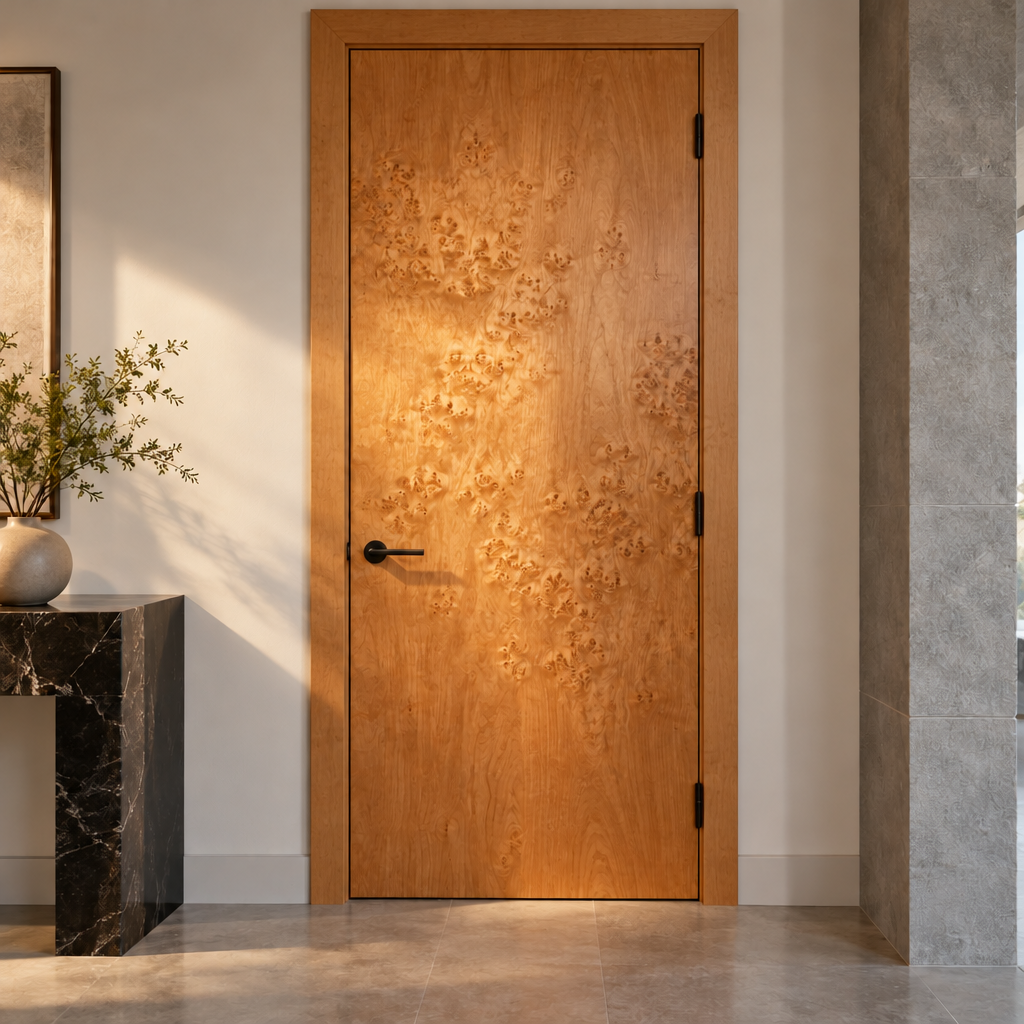
Figure Specification Watch Out:
01
Figure is not controlled by face grade. Species and grade alone do not establish the type or degree of figure.
Recommended response
Coordinate the desired figure, species, and grade with the manufacturer or veneer supplier, and document special selection requirements.
02
Unspecified figure may still occur. Omitting figure from the specification does not ensure an unfigured appearance.
Recommended response
If pronounced figure conflicts with the design intent, identify that restriction and confirm selection feasibility before specifying.
03
Specifying figure does not ensure uniformity between doors. Its intensity, scale, and distribution can vary across faces and adjacent openings.
Recommended response
If pronounced figure conflicts with the design intent, identify that restriction and confirm selection feasibility before specifying.
Grain & Figure
CrossBars
Cross bars are natural grain irregularities that appear as localized dips or bands running across the primary grain direction. While overall decorative figure is not graded by WDMA, cross bars are specifically regulated as a natural characteristic in face-grade tables, with defined allowances such as “slight” in Grade AA and A faces. They can interrupt otherwise straight grain and may become more pronounced depending on finish, lighting, or viewing angle.
TYPICAL APPEARANCE
Cross bars may appear on individual veneer leaves or repeat across matched leaves. Their visibility and distribution vary, so some doors may show noticeable cross-grain markings while others appear relatively clear.
Subtle cross-grain lines: Faint, narrow markings that interrupt the main grain pattern.
Pronounced bands: More visible crosswise markings that contrast with the surrounding veneer.
Repeated patterns: Cross bars repeated across adjacent matched leaves, creating a rhythmic pattern on the door face.
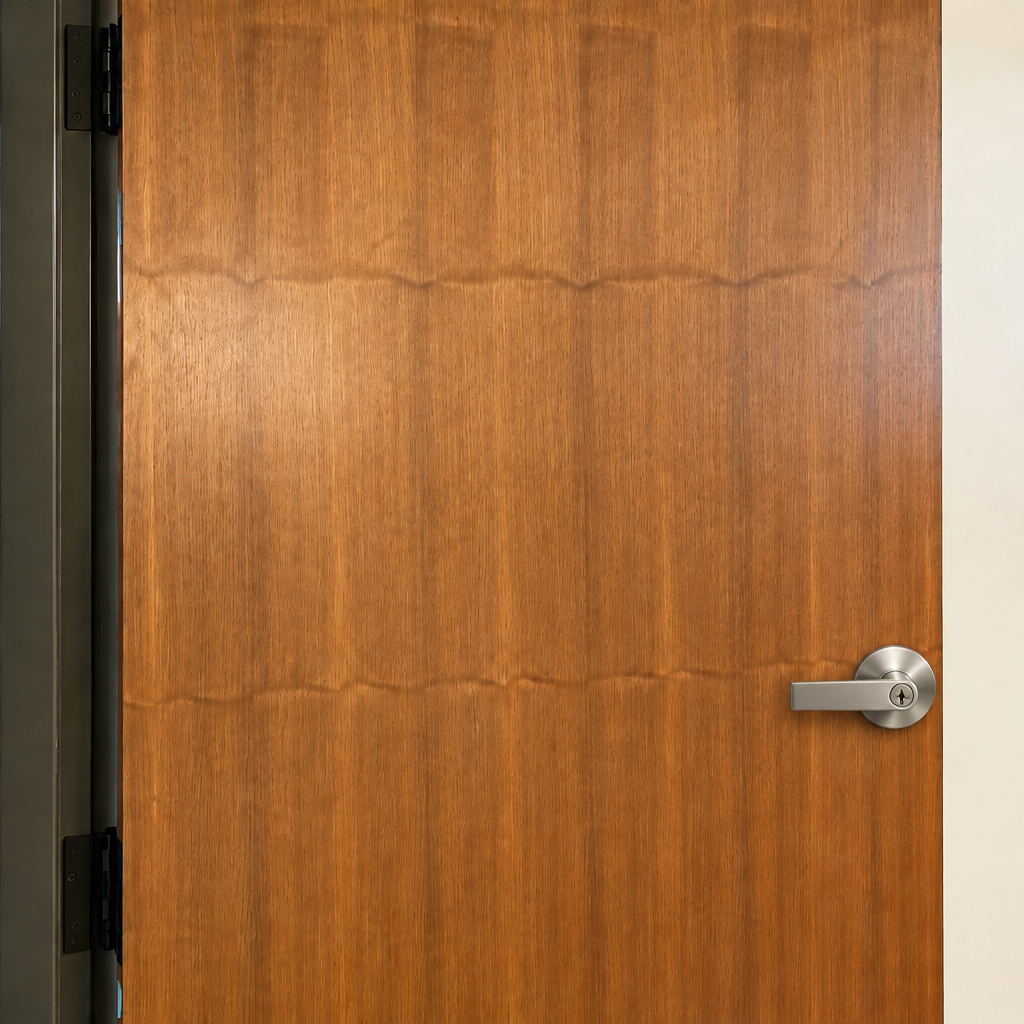
Cross Bars Specification Watch Out:
01
A straight-grain selection such as rift-cut or quarter-cut veneer does not guarantee uninterrupted straight grain. Natural cross bars may still interrupt the linear pattern.
Recommended response
If cross bars conflict with the design intent, establish any tighter selection requirements with the manufacturer and confirm feasibility before specifying.
02
Matching can repeat the marking. Cross bars occurring in successive veneer leaves may form a repeated pattern across the face.
Recommended response
Coordinate veneer selection and matching requirements where repeated cross-grain patterns would conflict with the design intent.
Grain & Figure
RayFleck/Flake
Ray fleck, also called ray flake, is most common in quarter-cut white and red oak, where veneer is sliced across the wood’s medullary rays—cells extending outward from the center of the log. It also appears in species like beech and sycamore. This ribbonlike or patchy figure is an inherent anatomical characteristic of the wood’s cellular structure, not a discoloration, grain defect, or finishing flaw.
TYPICAL APPEARANCE
Ray fleck contrasts with the surrounding grain through both its shape and its reflective quality. It is a defining feature of quarter-cut oak; rift cutting significantly minimizes its presence, though slight fleck may still occur.
Silvery ribbons: Elongated, lustrous markings that cross the straighter background grain.
Flakelike patches: Broader, irregular shapes that give quarter-cut oak its distinctive flecked character.
Shifting sheen: Flecks that reflect light differently from surrounding fibers, appearing lighter or darker as the viewing angle changes.
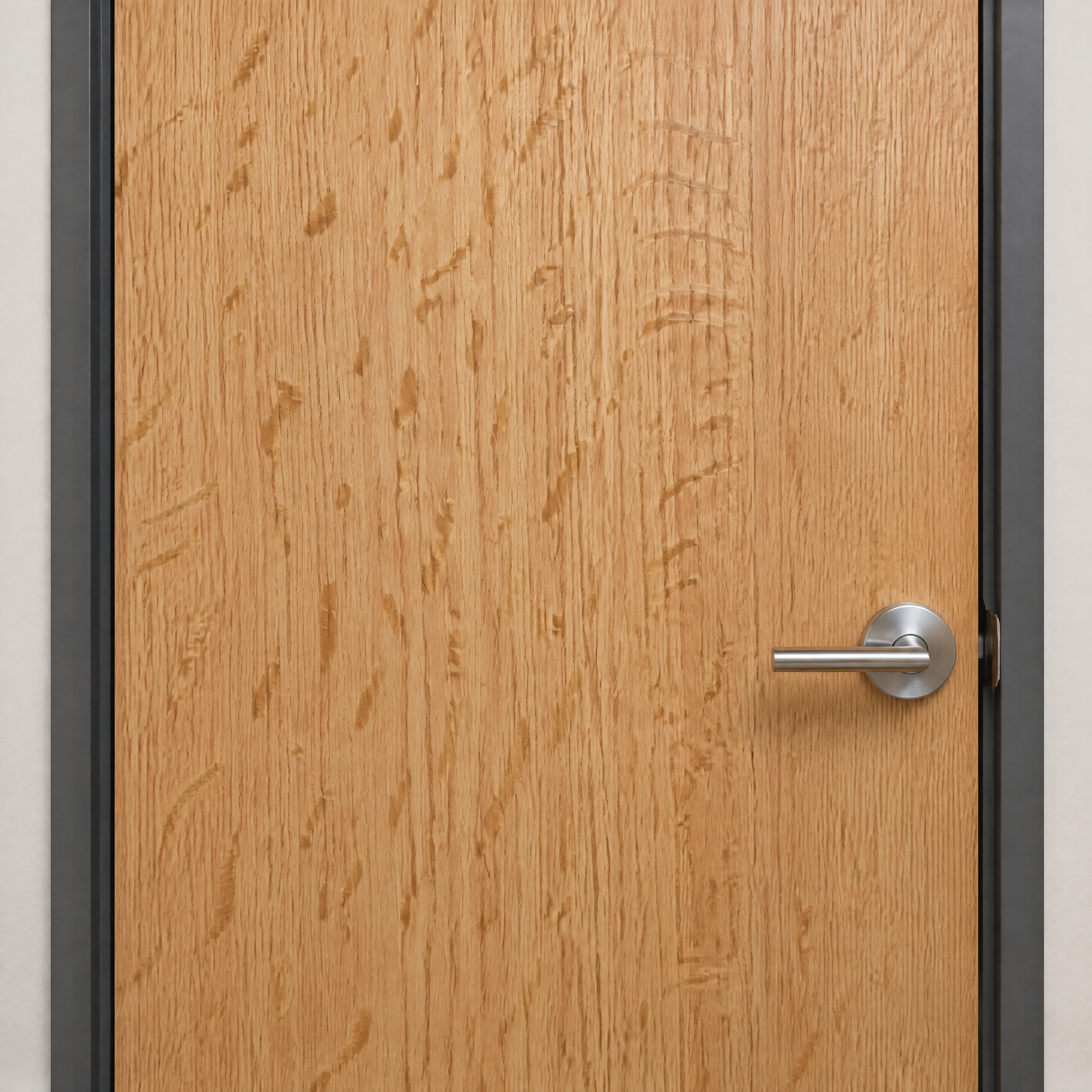
Ray Flecks Specification Watch Out:
01
Ray fleck is common in quarter-cut oak. Specifying a straight-grained cut alone does not establish a minimal-fleck appearance.
Recommended response
Specify rift-cut oak to help minimize ray fleck, but recognize that rift cutting does not eliminate it or guarantee a fleck-free face.
02
Leaf matching can turn ray fleck into a dominant pattern. Book matching may mirror prominent flecks, creating repeated shapes that draw attention away from the linear grain.
Recommended response
Coordinate the leaf-matching method with the desired appearance, considering the pattern created by the fleck—not just the grain alignment.
Ready to Specify?
Explore book-matched wood doors across a range of commercial settings. These examples demonstrate how veneer species, stain colors, and finishes accentuate symmetrical grain patterns and cathedral figures—from light, natural finishes to rich, contrasting wood tones.


