Natural Characteristics of Wood Veneer
Natural Characteristics: Natural Markings
Learn how authentic growth features—from pin knots to bark pockets—are regulated by face grades and where custom selection is required.
- Pin Knots
- Burls
- Gum Pockets
- Worm Tracks
- Vine Marks
Overview
Features such as pin knots, small burls, gum pockets, worm tracks, vine marks, and bark pockets reflect the tree’s natural growth and life cycle. While architectural face grades establish clear allowances for the size, frequency, and distribution of these localized markings, higher grades do not eliminate them entirely. Learn how these characteristics are defined and regulated, and determine when specific aesthetic requirements call for custom veneer selection prior to ordering.
At-A-Glance
What Face Grade Controls | What Face Grade Does NOT Control |
|---|---|
Which natural characteristics are permitted (and at what size or frequency) | Overall color tone, undertone, or sapwood-to-heartwood ratio |
Species-specific allowances for features like pin knots, mineral streaks, and gum pockets | The prominence of figure, ray fleck, or cross bars |
A defined quality threshold — not a definition of appearance uniformity | Visual differences created by matching method, assembly method, lighting, or finish |
"Specifying AA instead of A narrows the permitted characteristics — it does not define the appearance."
Natural Markings
PinKnots&SmallBurls
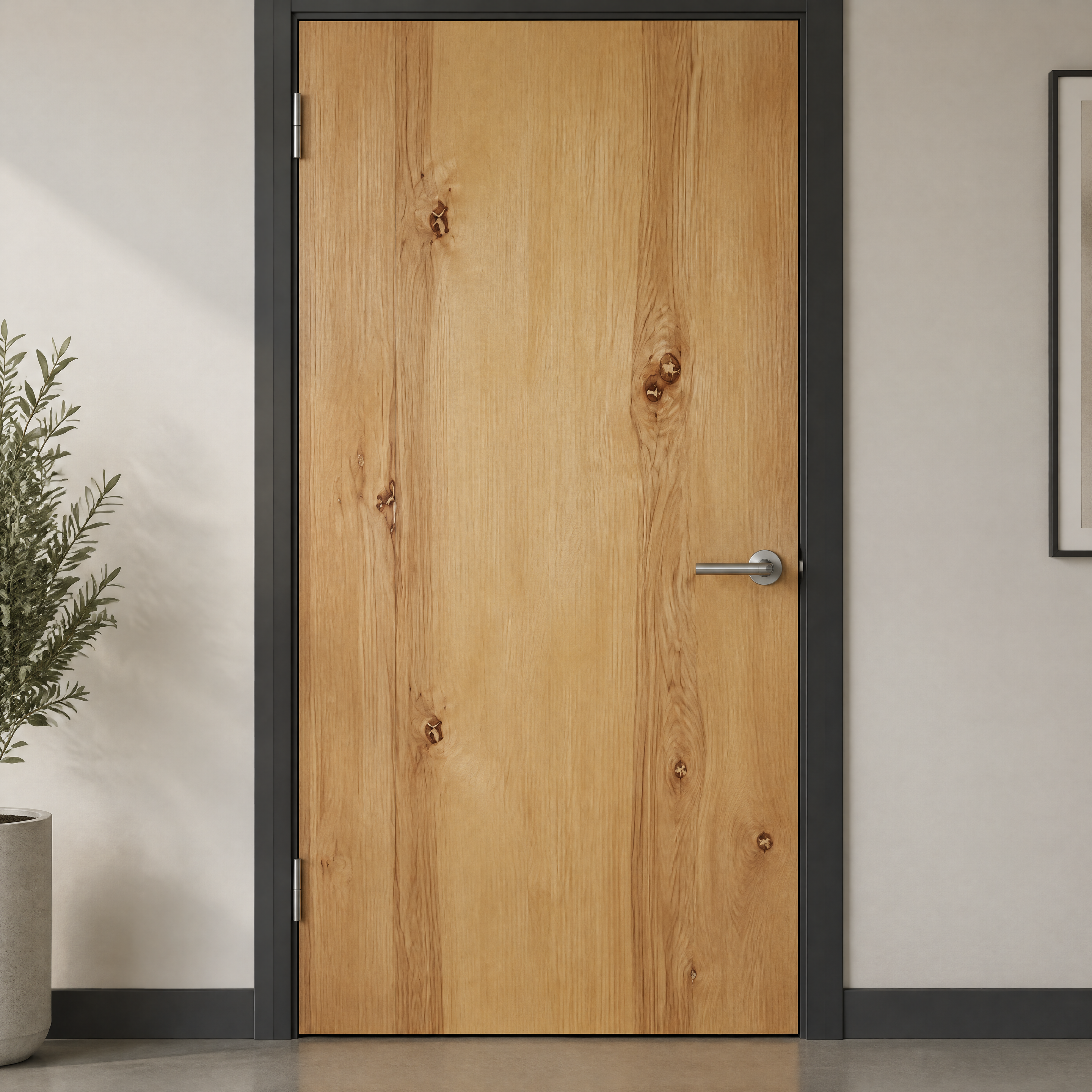
Pin knots and small burls are localized growth characteristics that create small dots, swirls, or clusters within a veneer’s grain. WDMA face-grade tables regulate their acceptance by species, distinguishing subtle, blending pin knots from more conspicuous markings and establishing limits on number and size. Higher grades restrict these characteristics more closely, but do not necessarily eliminate them.
TYPICAL APPEARANCE
These markings can punctuate otherwise clear veneer with distinct dots, tight grain patterns, or small clusters. Unlike elongated streaks, they tend to draw the eye to individual locations on the door face.
Pinpoint knots: Small, round or oval markings, often darker than the surrounding veneer.
Small grain swirls: Compact curls or tangled grain
patterns that form a localized burl.Grouped accents: Several nearby knots or small burls that create a concentrated area of visual interest.
Specification Watch Outs:
01
Grade AA does not mean knot- or burl-free.
Allowances depend on the species and whether the marking is blending or conspicuous.
Recommended response
Specify rift-cut oak to help minimize ray fleck, but recognize that rift cutting does not eliminate it or guarantee a fleck-free face.
02
A small marking can still draw attention.
A dark-centered pin knot may stand out more than a larger, blending grain swirl.
Recommended response
Define whether the concern is dark contrast, visible size, or both rather than relying on a general request for “clear veneer.”
03
Small burls are not the same as specified burl figure.
Permitted localized burls do not establish an intentionally figured appearance.
Recommended response
If decorative burl figure is part of the design, coordinate it as a special veneer selection rather than relying on natural-characteristic allowances.
Natural Markings
GumPockets
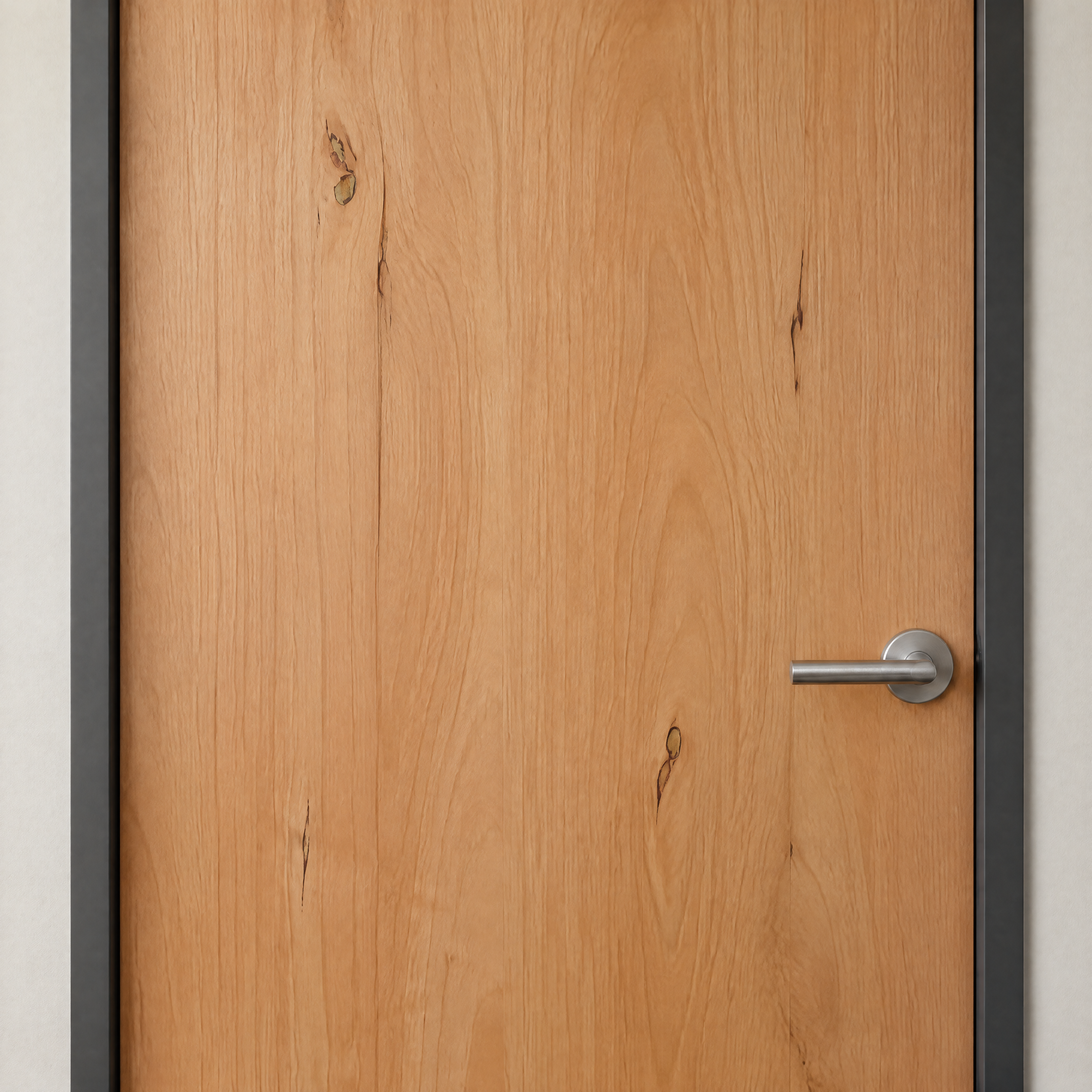
Gum pockets are localized accumulations of natural gum within the wood, particularly common in cherry. They form in response to injury or insect activity as the tree grows and may be exposed during veneer slicing as dark spots, narrow streaks, or irregular patches. These markings originate within the wood rather than from stain or finishing.
TYPICAL APPEARANCE
Gum markings punctuate cherry’s fine, relatively smooth grain with concentrated dark accents. Some remain compact, while others trail along the grain or spread into larger patches.
Dark gum spots: Small brown-to-black markings that contrast with the surrounding wood.
Trailing streaks: Slender, elongated lines that may extend from a gum spot along the grain.
Irregular pockets: Broader accumulations with uneven outlines, creating a more pronounced localized marking.
Gum Pockets Specification Watch Outs:
01
Grade AA cherry does not guarantee a gum-free face.
The WDMA face-grade table permits occasional gum spots in both Grade AA and Grade A faces, treating them as a natural characteristic of the species rather than a defect.
Recommended response
If a virtually clear face is required, coordinate custom flitch selection with the manufacturer rather than relying on standard face grades alone, or specify another veneer.
02
Gum pockets create sharp localized contrast that finishes cannot hide.
Because gum markings are dark brown or black, they stand out prominently against cherry’s pale initial tone and remain visible even as the wood naturally deepens in color.
Recommended response
Account for localized dark markings when selecting cherry for high-visibility focal areas, and confirm acceptable contrast levels during the submittal phase.
03
Natural gum markings are often mistaken for finishing defects.
Trailing streaks and small dark spots can be misidentified during field inspection as surface contamination, stain blotching, or defective topcoat bridging.
Recommended response
Clarify in project submittals that occasional gum pockets and trailing streaks are an authentic, permitted anatomical feature of black cherry.
Natural Markings
VineMarks
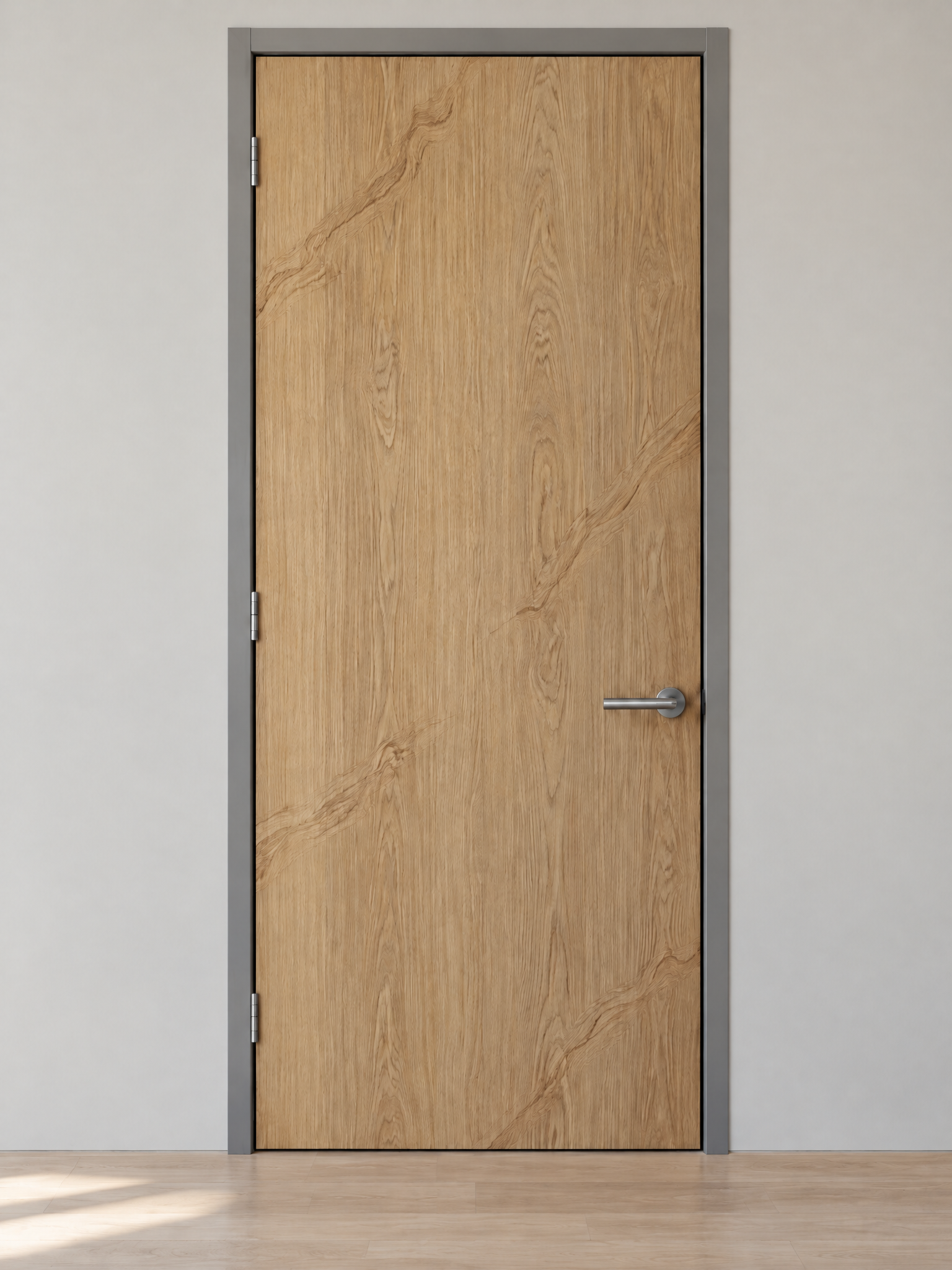
Vine marks are bands of irregular grain caused by climbing vines growing around the tree. They run across or diagonally to the main grain, creating localized interruptions rather than the lengthwise discoloration associated with many streaks. Their acceptance depends on the species and specified face grade.
TYPICAL APPEARANCE
Vine marks are distinguished by a change in grain direction, not necessarily by a dark line. They may appear as subtle deviations or more noticeable bands cutting through the surrounding grain.
Cross-grain bands: Irregular markings running across the main grain direction.
Diagonal traces: Angled bands that interrupt the veneer’s prevailing pattern.
Localized distortion: Areas where the grain bends or shifts around the marking.
Vine Marks Specification Watch Outs:
01
Vine marks are not simply color streaks.
A restriction on dark streaks may not address irregular grain that blends in color with the surrounding wood.
Recommended response
Identify vine marks separately when the concern is grain interruption rather than discoloration.
02
The same face grade does not establish the same allowance across species.
Acceptance of vine marks varies by species; a blanket assumption that premium veneer excludes them can lead to unexpected results.
Recommended response
Check the vine-mark allowance in the applicable species table and confirm any tighter project requirements with the manufacturer before specifying.
Ready to Specify?
Explore book-matched wood doors across a range of commercial settings. These examples demonstrate how veneer species, stain colors, and finishes accentuate symmetrical grain patterns and cathedral figures—from light, natural finishes to rich, contrasting wood tones.


