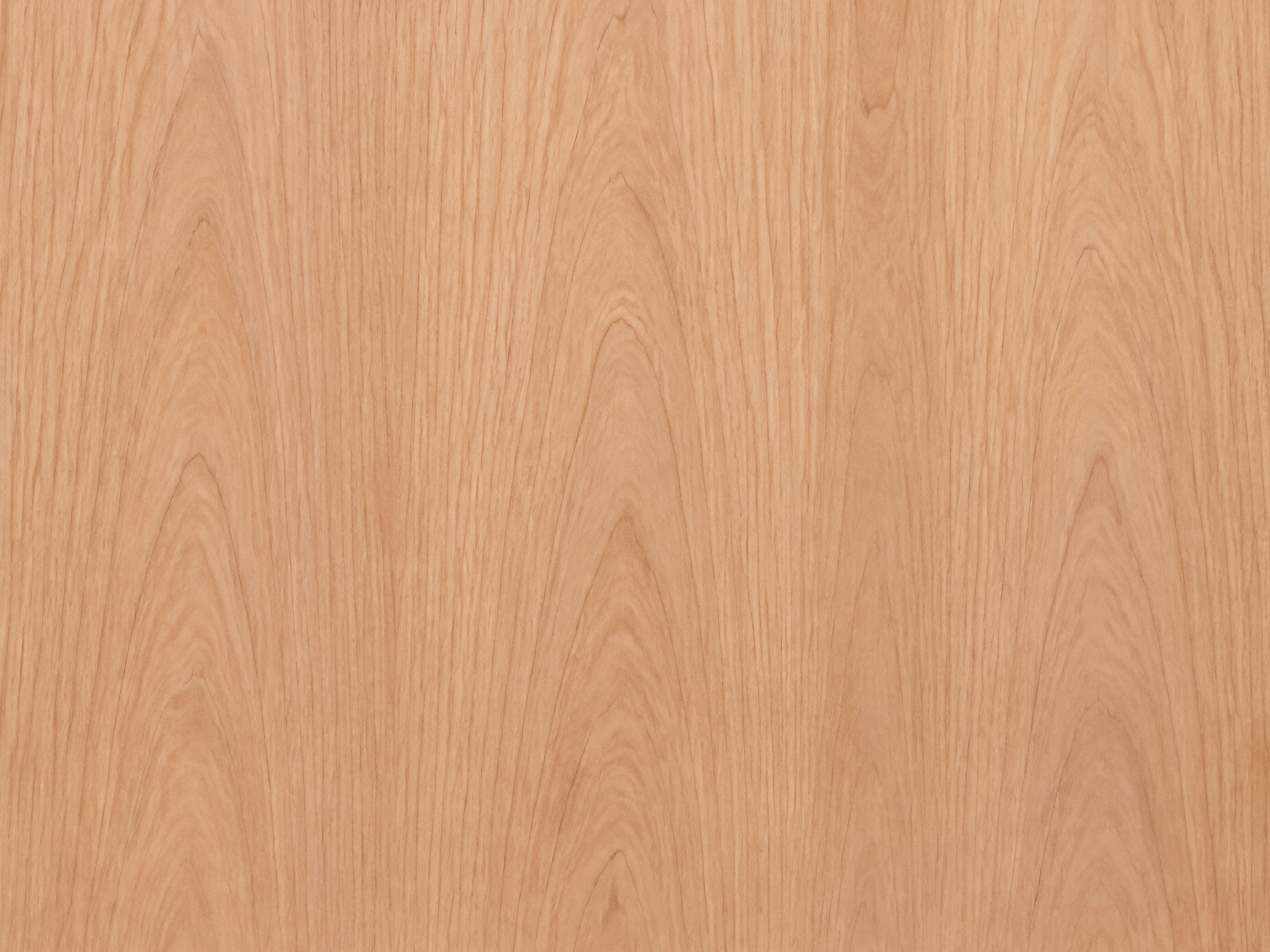
Plain Sliced (Default)
Default standard for traditional, formal, and warm transitional interiors. Combines cathedral and straighter grain with gentle figure.
Wood Veneer | Species Overview
Cherry offers a warm pinkish- to reddish-brown appearance with a fine, satiny grain that deepens over time — specified for traditional, formal, and warm transitional interiors.
Cherry has a warm light pinkish- to reddish-brown appearance that typically deepens toward a richer red-brown over time. It has a fine, generally straight grain with gentle figure and a smooth, medium-pore texture. Well suited to traditional, formal, and warm transitional interiors.
Its even texture and satiny grain can produce a refined finished appearance. A clear coat best preserves and emphasizes cherry's natural warmth and allows the species’ natural oxidation to develop over time.
Default cut
Default match
Pore structure
Relative cost
Texture | Fine, smooth, medium pore |
Color range | Light pinkish-brown to richer red-brown |
Cuts available | Plain Sliced (default), Rotary, Quarter Sliced |
Relative cost | Moderate range |
Watch for | Color deepening over time, stain blotching |
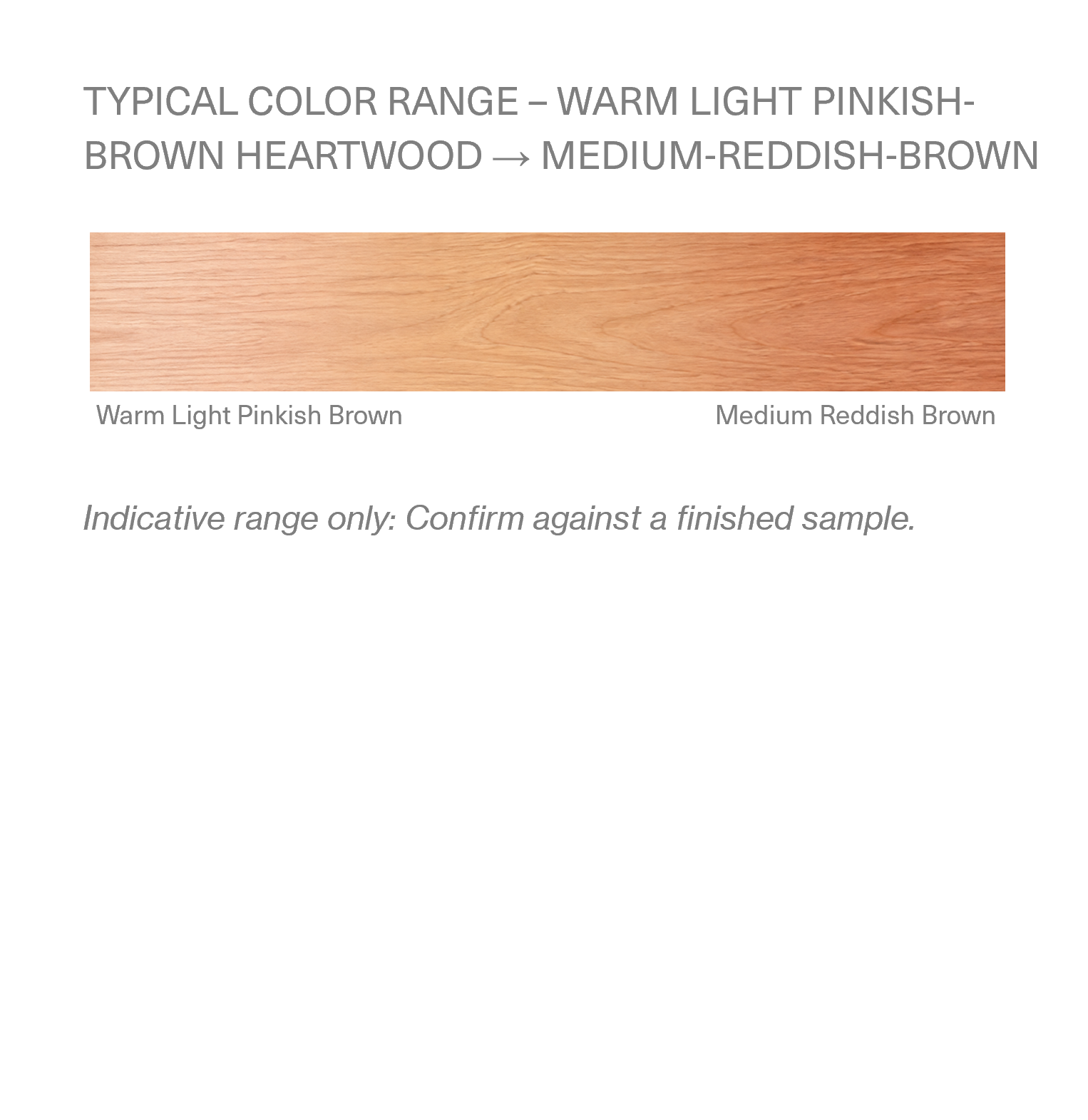
A warm heartwood color that deepens with light and air
Cherry ranges from a warm light pinkish-brown to medium reddish-brown, with a satiny, warm luster. Color is sourced from heartwood and is consistently warm, though natural variation in shade and undertone is inherent to the species. Sapwood is not permitted at standard grade.
⚠ SPECIFICATION NOTE
Cherry’s most important color characteristic is its tendency to deepen with light and air exposure. An initial sample review may not reflect the long-term installed appearance. Discuss expected aging with clients before finalizing finish direction.
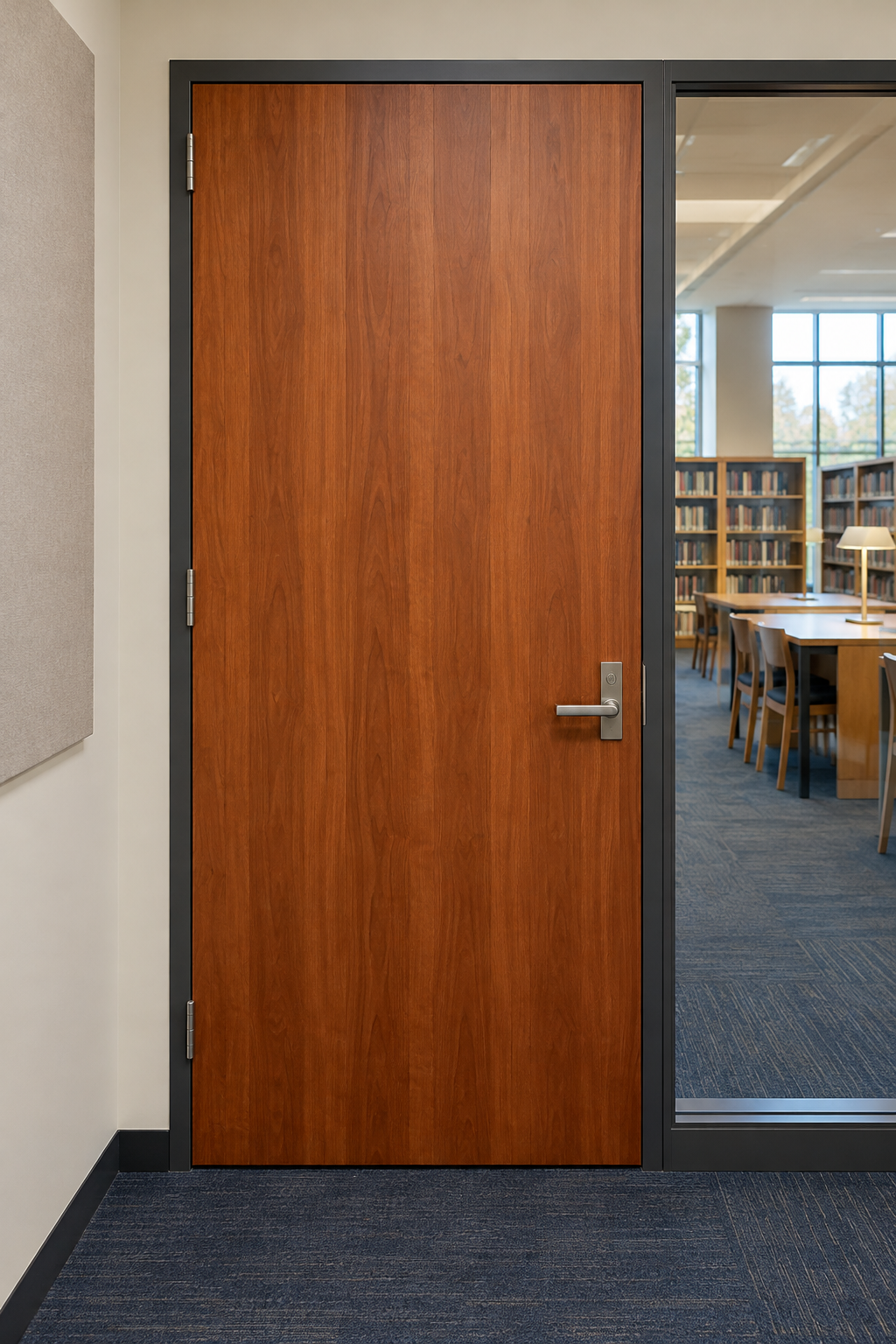
Fine, even, and satiny, with gentle figure
Cherry has a fine, generally straight grain with a smooth, medium-pore texture. Plain-sliced faces can introduce gentle figure and mild cathedral movement. The semi-open pore surface finishes evenly and accepts clear finishes particularly well.
Adjacent leaves are mirrored in book matching. Where grain figure alternates between leaves, a subtle barber-pole effect may appear as a natural characteristic of the match.
⚠ SPECIFICATION NOTE | STAIN ABSORPTION
Cherry can blotch under direct stain application. Clear or lightly toned finishes are lowest risk. Evaluate stain options on a finished 8"x10" sample—not a 2"x4" sample—before specifying any medium-to-dark stain direction.
For a darker, richer wood character, see the Walnut Spec Brief. Cherry provides warmth in the warm-medium brown range; walnut offers deeper brown tones suited to contemporary and formal applications.
Default standard for traditional, formal, and warm transitional interiors. Combines cathedral and straighter grain with gentle figure.
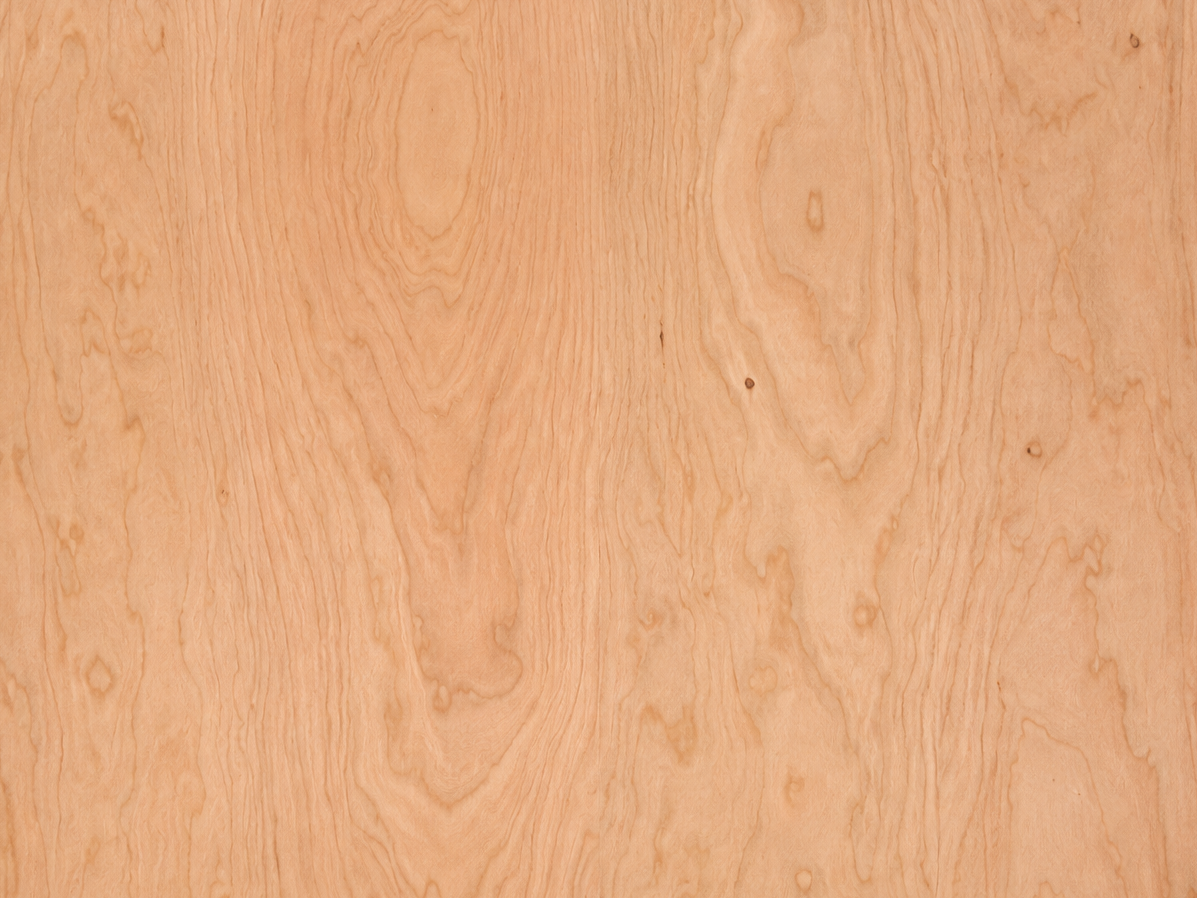
Cost-effective option with a broader, flowing grain pattern. Expect more grain variation; confirm availability.
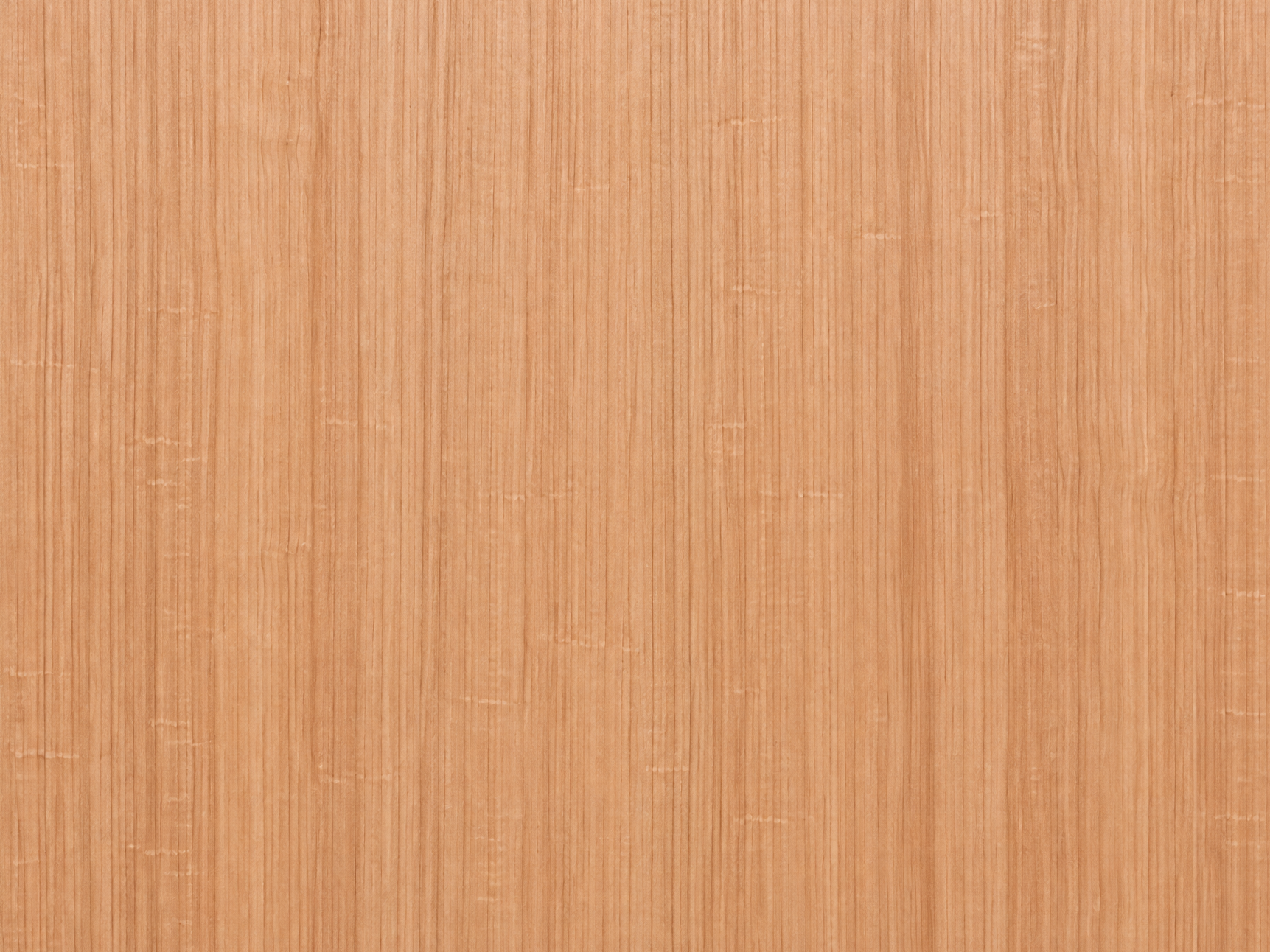
Straighter, more linear grain with minimal figure for a more restrained character. Lower yield, so confirm with the manufacturer early.
These are inherent to the species. Their acceptance is governed by the applicable WDMA face-grade table together with the project's approved visual standard.
CHARACTERISTIC | APPEARANCE | GRADE CONSIDERATION |
|---|---|---|
Color Variation | Mild tonal variation across face or between leaves | Allowable by grade; define acceptable color range explicitly |
Color Streaks | Subtle linear color changes in the grain direction | Allowable by grade |
Mineral Streaks | Darker lines or marks from natural mineral uptake | Allowable by grade; may be visible under clear finish |
Gum Spots | Small circular accumulations of natural resin | Allowable by grade; limited at AA; may be apparent under clear finish |
Figure | Irregular grain movement; may appear in plain-sliced faces | Not grade-controlled; contributes to natural character |
Cross Bars | Faint horizontal bands crossing grain direction | Natural; cannot be fully eliminated |
Barber-Pole Effect | Alternating light/dark leaves in book match | Result of book matching; not a fabrication defect |
Small Burls/Pin Knots | Small circular or localized grain features | Allowable by grade; limited at AA |
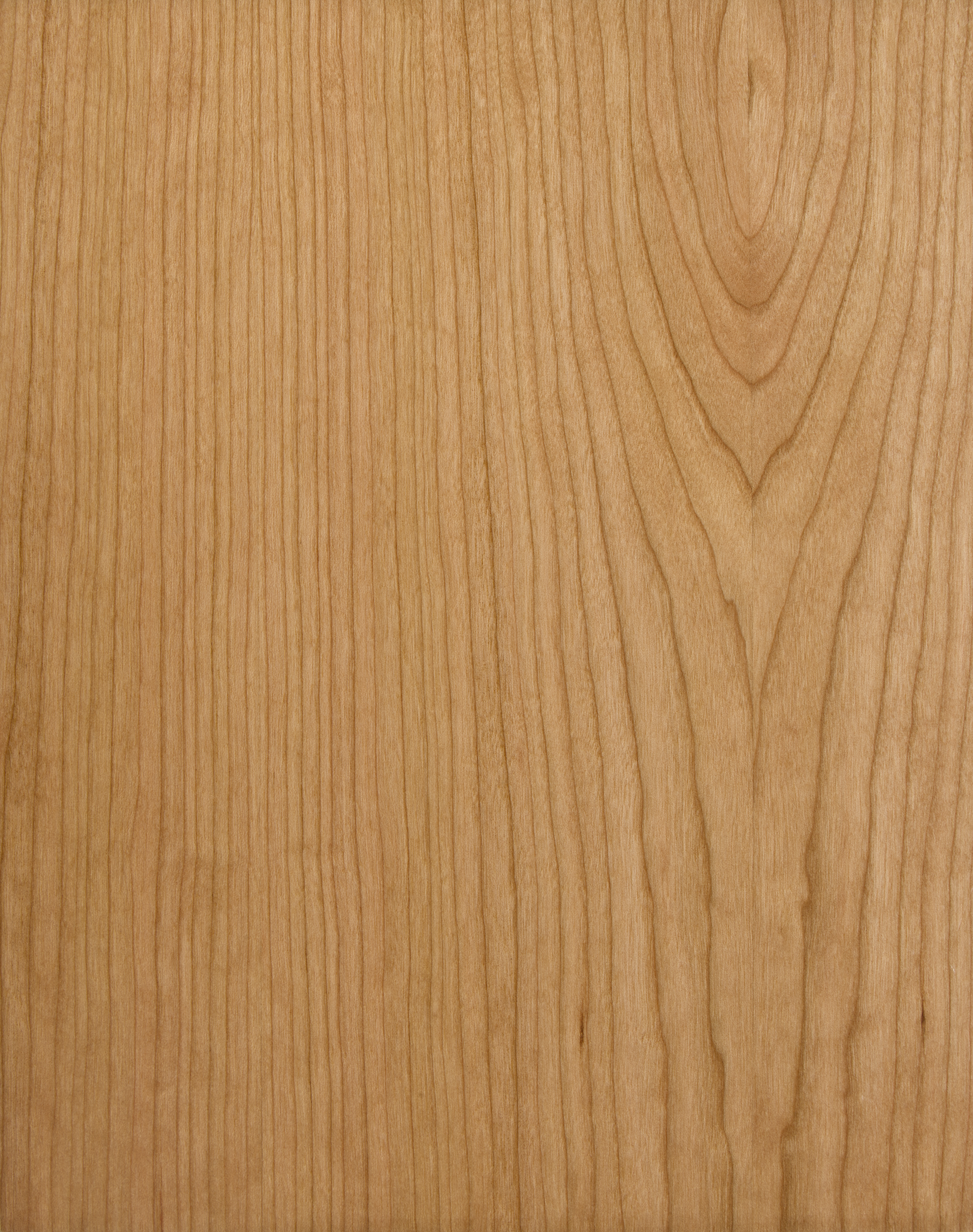
Lowest risk. Best preserves cherry’s natural pinkish-brown warmth and lets natural oxidation develop, with all grain and natural characteristics visible.
Lowest risk – Best preserves natural warmth.
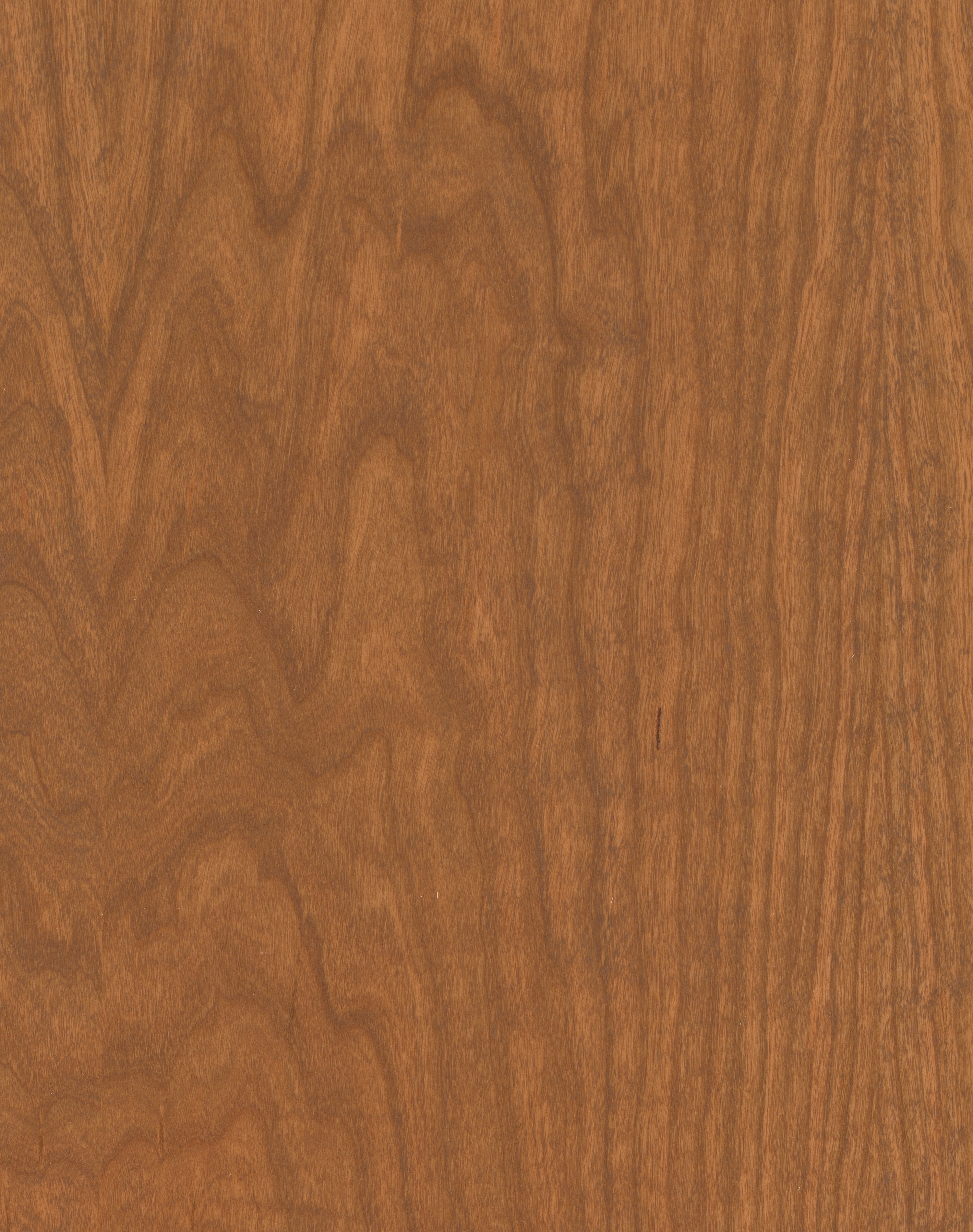
Moderate risk. Cherry can blotch under direct stain, though it may help reduce visible color variation between doors.
Moderate risk – Sample approval required.
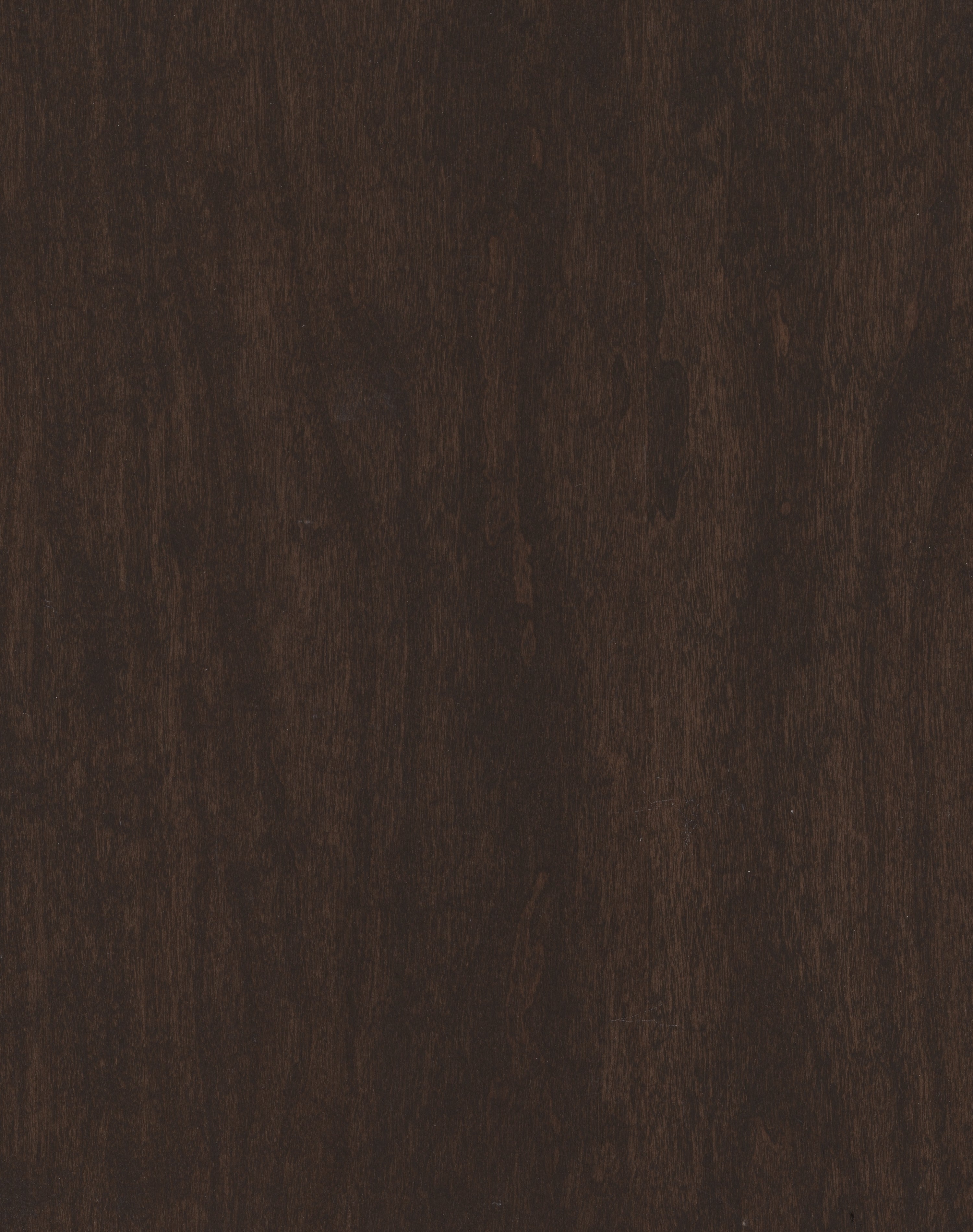
Higher risk. Can mask cherry’s natural warmth and complicate long-term color matching as the wood continues to oxidize.
Higher risk – Confirm design intent first.
01
Cherry typically deepens from a light pinkish-brown toward a richer reddish-brown with exposure to light and air. An initial sample at time of specification may not represent the door’s appearance six months or two years into service. Uneven sun exposure across a door group can produce visible color differences within the same installation.
Recommended response
Discuss expected color aging with the client before finalizing finish selection. Consider a clear finish that allows and enhances natural oxidation. Document expectations in the project specification and obtain owner acknowledgment of anticipated aging behavior.
02
Cherry's heartwood is consistently warm, but natural variation in shade, depth, and undertone is inherent to the species. Doors produced from different flitches — or from different positions in the same log — can appear meaningfully different, particularly in installations with wide color ranges or significant natural light variation.
Recommended response
Define the acceptable heartwood color range explicitly in the project specification. For visually prominent or coordinated door groups, request a finished 8"x10" sample under representative project lighting before approving production.
03
Cherry’s natural character is most effectively preserved with a clear finish—but a clear finish also means that all natural markings, color streaks, gum spots, and tonal variation remain fully visible. These are allowable characteristics, not defects, but should be anticipated and communicated for aesthetically sensitive applications.
Recommended response
Establish the acceptable range of natural characteristics—including color variation, gum spots, and mineral streaks — in the project specification. Approve a finished 8"x10" sample that represents the full expected range before fabrication begins.