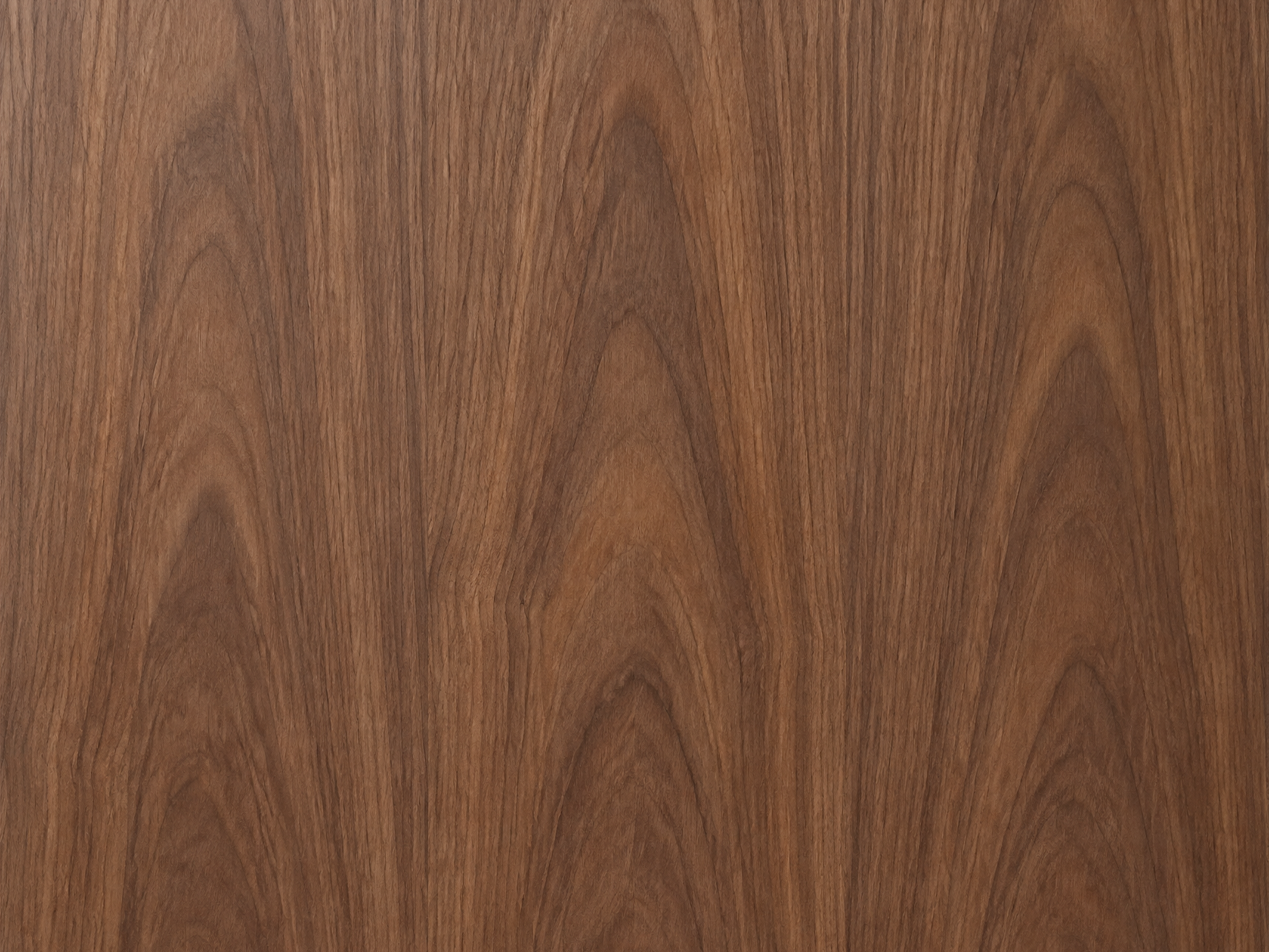
Plain Sliced (Default)
Default standard for contemporary, formal, hospitality, and high-visibility interiors. Cathedral and straighter grain with gentle figure; the most expressive cut.
Wood Veneer | Species Overview
Walnut offers a rich, refined appearance with a fine texture and deep chocolate-brown warmth — specified for contemporary and formal interiors where depth of color is the design intent.
Walnut provides a rich, refined appearance ranging from lighter brown to deep chocolate brown. Its warmth and depth make it suitable for both contemporary and formal interior applications. It has a fine texture, generally straight grain, and gentle figure. Walnut accepts stains and topcoats evenly. Unlike most species, its heartwood color may become lighter as it ages—a characteristic that should be considered when selecting a finish direction and setting client expectations.
Default cut
Default match
Pore structure
Relative cost
Texture | Fine, moderately open |
Color range | Lighter tan-brown to deep chocolate |
Cuts available | Plain Sliced (default), Rotary, Quarter Sliced |
Relative cost | Premium range |
Watch for | Lightening with age, sapwood contrast |
Rich heartwood browns that lighten, rather than darken, with age
Walnut ranges from lighter tan-brown to deep chocolate brown, with natural variation between heartwood and sapwood. Heartwood provides the rich, warm brown tones most associated with the species. Sapwood is distinctly lighter—creamy to pale gray—and is generally not present in premium specifications.
⚠ SPECIFICATION NOTE
Unlike most species, walnut's heartwood typically becomes lighter and more golden over time with light exposure. Initial deep-brown tones may shift meaningfully in installed conditions. Evaluate finish options with this aging behavior in mind.
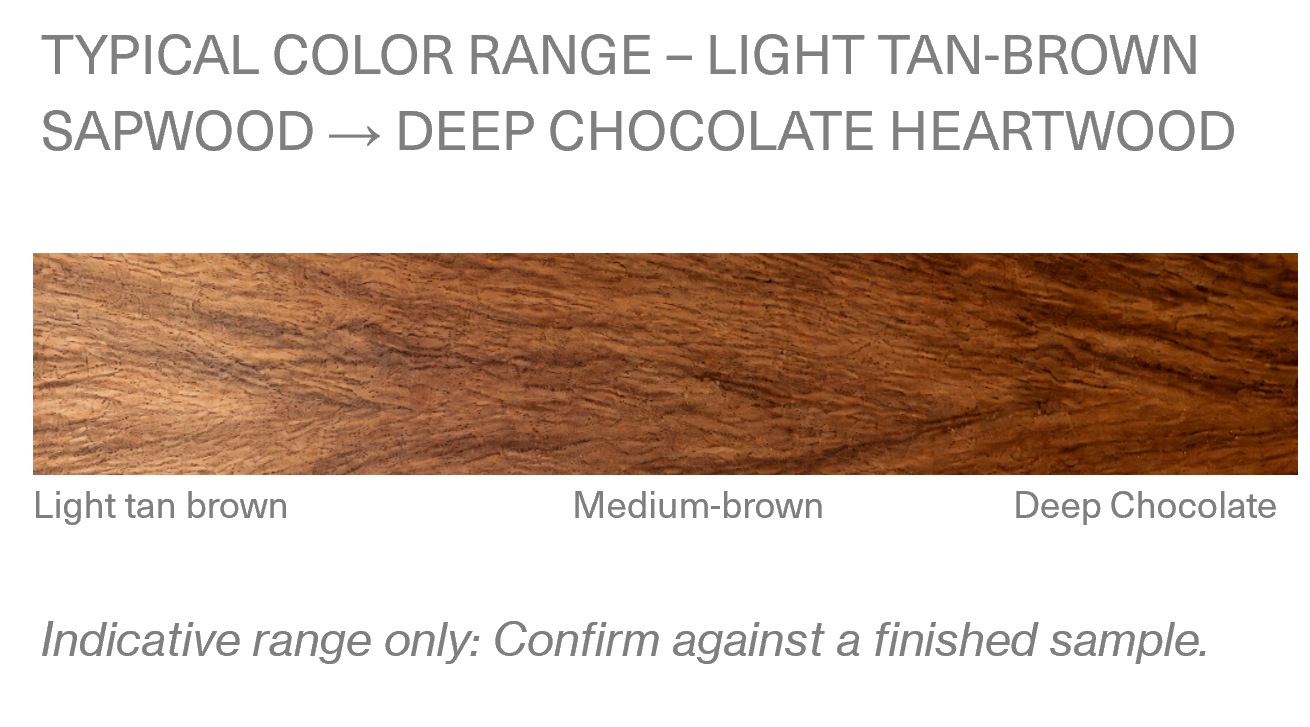
Fine and moderately open, with gentle figure and good finish depth
Walnut has a fine, moderately open texture with a generally straight grain. Plain-sliced faces can introduce gentle cathedral figure and natural grain movement. The semi-open pore structure produces a refined surface that accepts both clear and stained finishes evenly and with good depth.
Adjacent leaves are mirrored in book matching. Walnut’s depth of color makes the barber-pole reflectivity effect generally less pronounced than in lighter species, though it may still be present.
⚠ SPECIFICATION NOTE | STAIN ABSORPTION
Walnut’s semi-open grain generally accepts stains evenly. However, natural heartwood-to-sapwood variation can produce color differences after finishing. Where color uniformity is important, define acceptable sapwood content and evaluate on a finished 8"x10" sample.
For a warmer, medium-brown species with a lighter natural tone, see the Cherry Spec Brief. Walnut occupies the darkest end of Forte’s standard species range; cherry is a complementary choice for medium-warm applications.
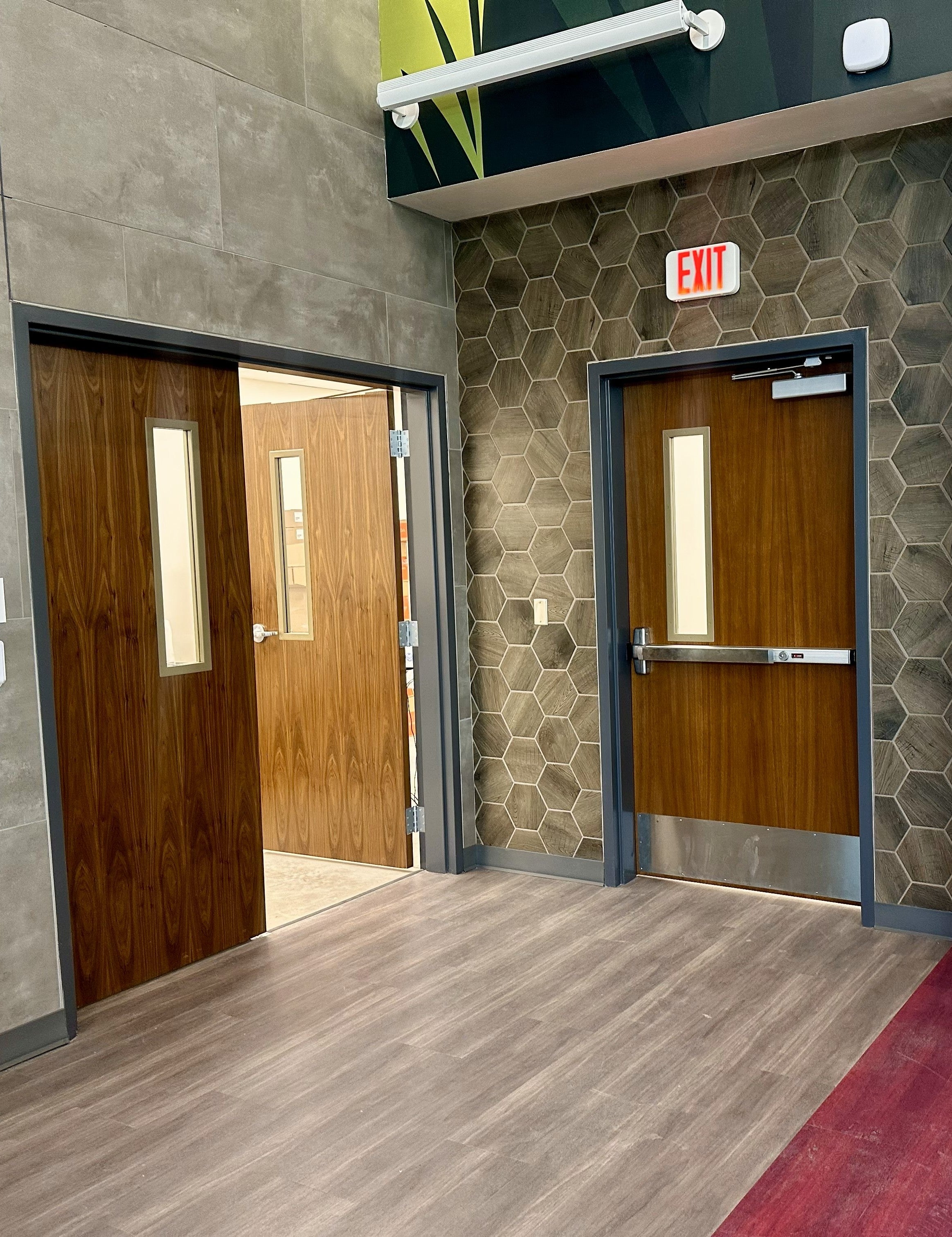
Default standard for contemporary, formal, hospitality, and high-visibility interiors. Cathedral and straighter grain with gentle figure; the most expressive cut.
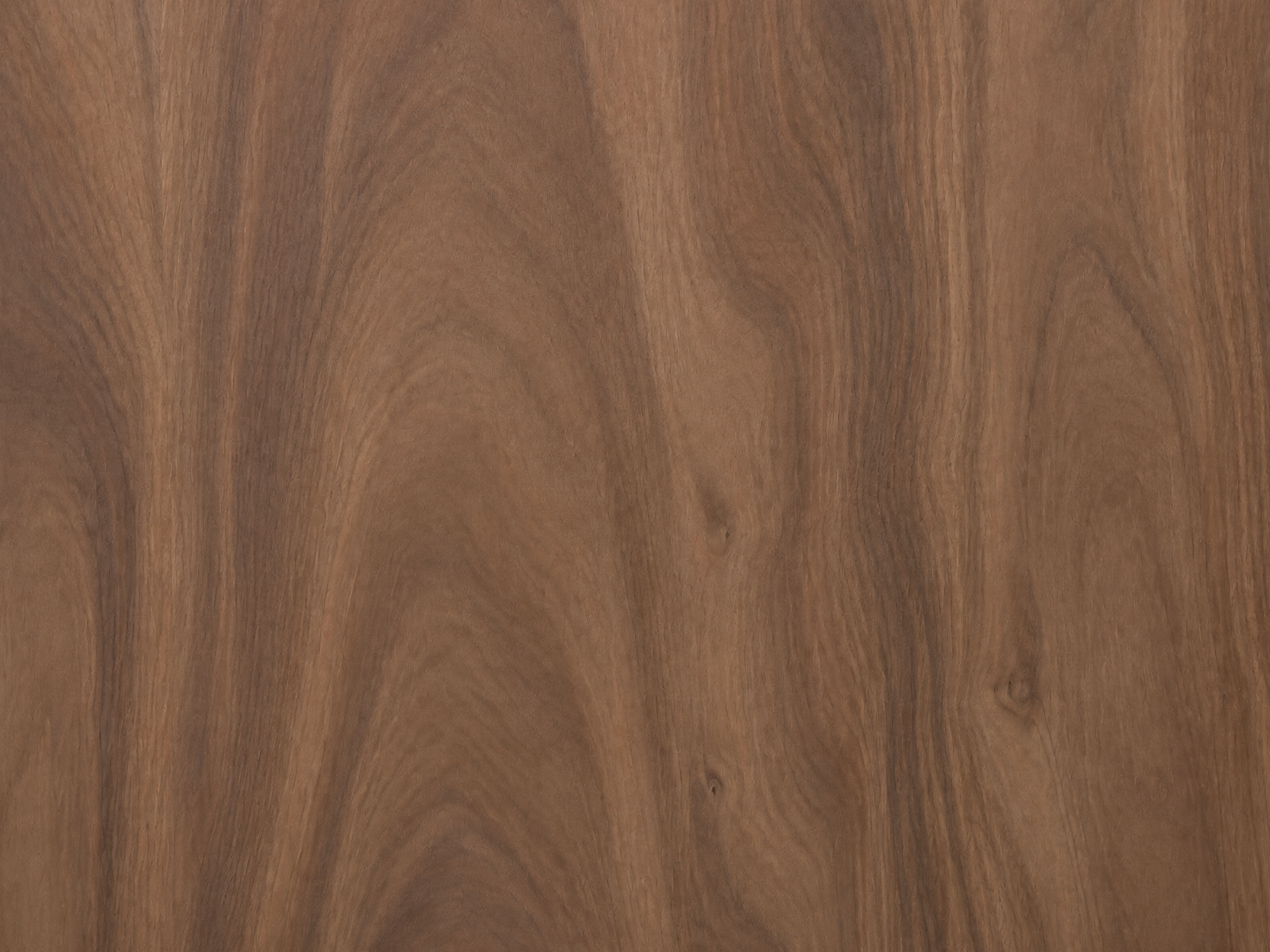
Cost-effective option with broader, flowing grain and stronger natural walnut character. Confirm availability.
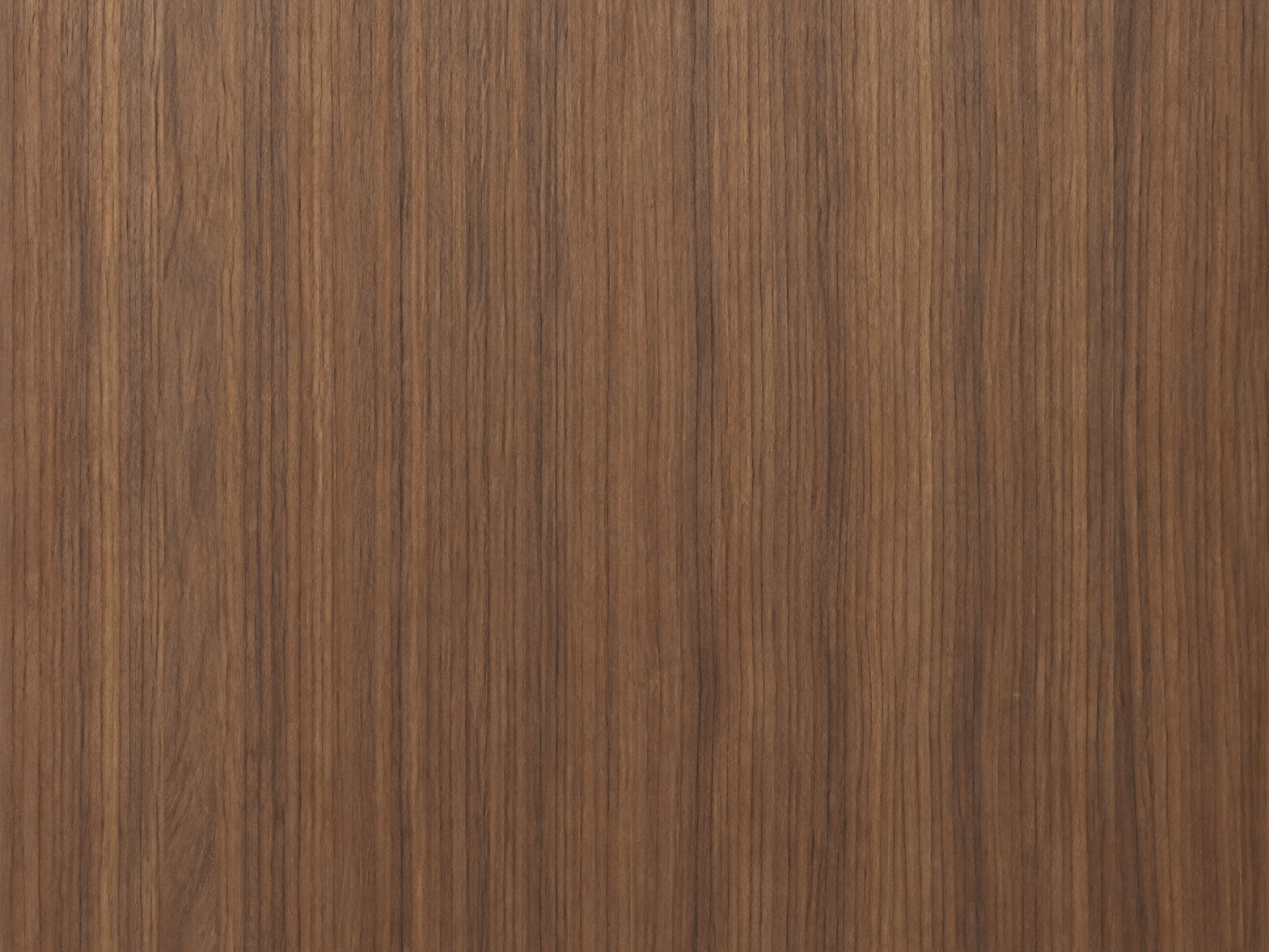
Straighter, more linear grain with minimal figure for the most restrained expression. Lower yield, so confirm with the manufacturer early.
These are inherent to the species. Their acceptance is governed by the applicable WDMA face-grade table together with the project's approved visual standard.
CHARACTERISTIC | APPEARANCE | GRADE CONSIDERATION |
|---|---|---|
Color Variation | Range from lighter tan-brown to deeper chocolate brown within same installation | Allowable by grade; define acceptable color range and heartwood-to-sapwood balance |
Color Streaks | Linear or irregular color changes in grain direction | Allowable by grade |
Mineral Streaks | Darker marks from natural mineral uptake | Allowable by grade; generally less prominent than in light species |
Figure | Irregular grain movement; may appear in plain-sliced and rotary faces | Not grade-controlled; can be valued as natural character |
Cross Bars | Faint horizontal bands crossing grain direction | Natural; cannot be fully eliminated |
Barber-Pole Effect | Alternating light/dark reflectivity in book match; less prominent in darker species | Result of book matching; not a fabrication defect |
Small Burls/Pin Knots | Small circular or localized grain features | Allowable by grade; limited at AA |
Preferred. Best preserves walnut’s natural warmth and depth, and lets heartwood color and grain read fully.
Preferred – Lowest risk for an even, natural appearance.
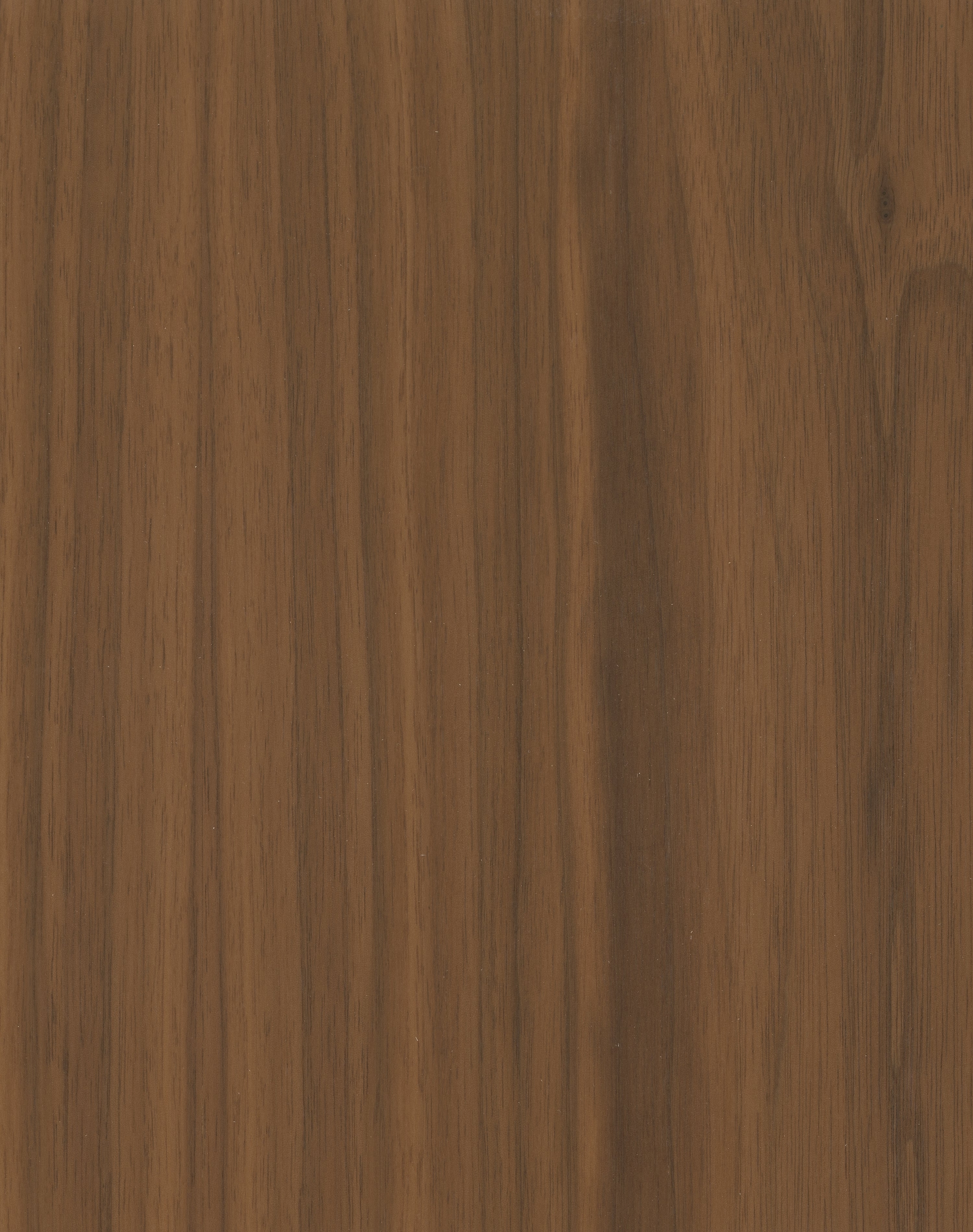
Use only where color equalization is needed. Can help reduce visible sapwood-to-heartwood contrast; evaluate on a finished full-size sample.
Modest control – Sample approval required.
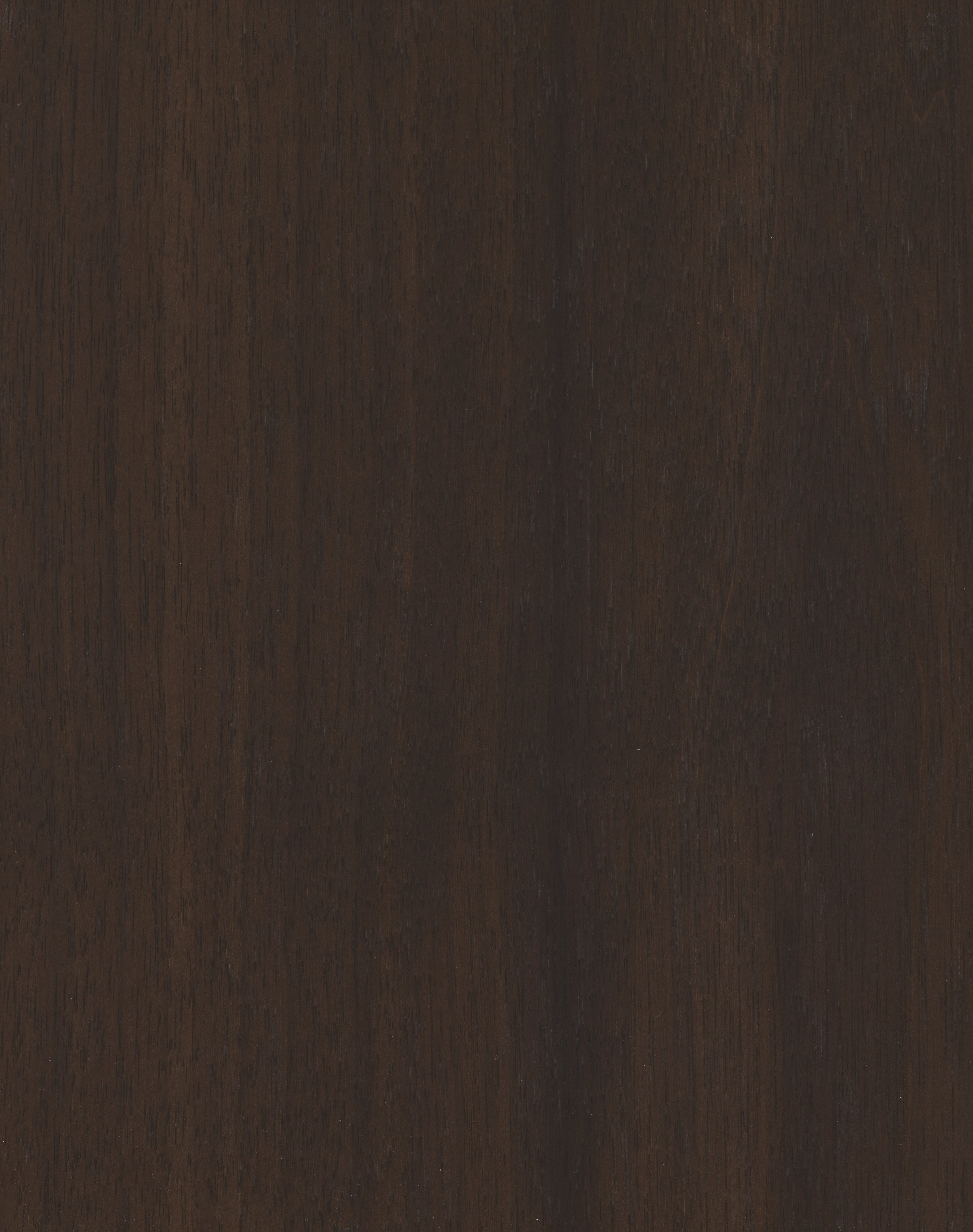
Use only for a deliberate, more uniform dark appearance. Additional dark stain can make walnut appear muddy or reduce grain definition.
Use with care – Validate before proceeding.
01
Unlike cherry, mahogany, and most other architectural veneers, walnut’s heartwood typically becomes lighter and more golden over time through light exposure. Initial deep brown tones may shift meaningfully—particularly in installations with strong natural or artificial lighting. Uneven light exposure across a door group can produce visible color differences within the same installation over time.
Recommended response
Discuss expected color aging with the client before finalizing finish selection. Document anticipated color development in the project specification and obtain owner acknowledgment. For installations with mixed sun exposure, evaluate whether a finish that stabilizes color may reduce long-term variation.
02
Walnut’s heartwood provides the rich brown tones most associated with the species. Sapwood is distinctly lighter—creamy to pale gray—and can be visually prominent within a door face or across a door group. The proportion of sapwood to heartwood varies within a flitch and between flitches. Where color consistency is important, this variation must be actively managed through specification.
Recommended response
Define the acceptable sapwood content and color range explicitly in the project specification. For premium applications, consider specifying heartwood-only veneer where available. Review a finished 8"x10" sample before approving production on visually sensitive applications.
03
Plain-sliced walnut can produce pronounced cathedral grain and visible figure—an expressive, natural character appropriate to many interiors but which may conflict with design intents calling for a quieter, more linear appearance. Plain-sliced specification does not guarantee a subdued surface.
Recommended response
If a quieter, more linear appearance is required, specify quarter-sliced walnut for a straighter, more controlled grain expression. Review a finished sample of the specified cut before approving. For the most restrained expression in walnut, quarter-sliced is the preferred specification.